

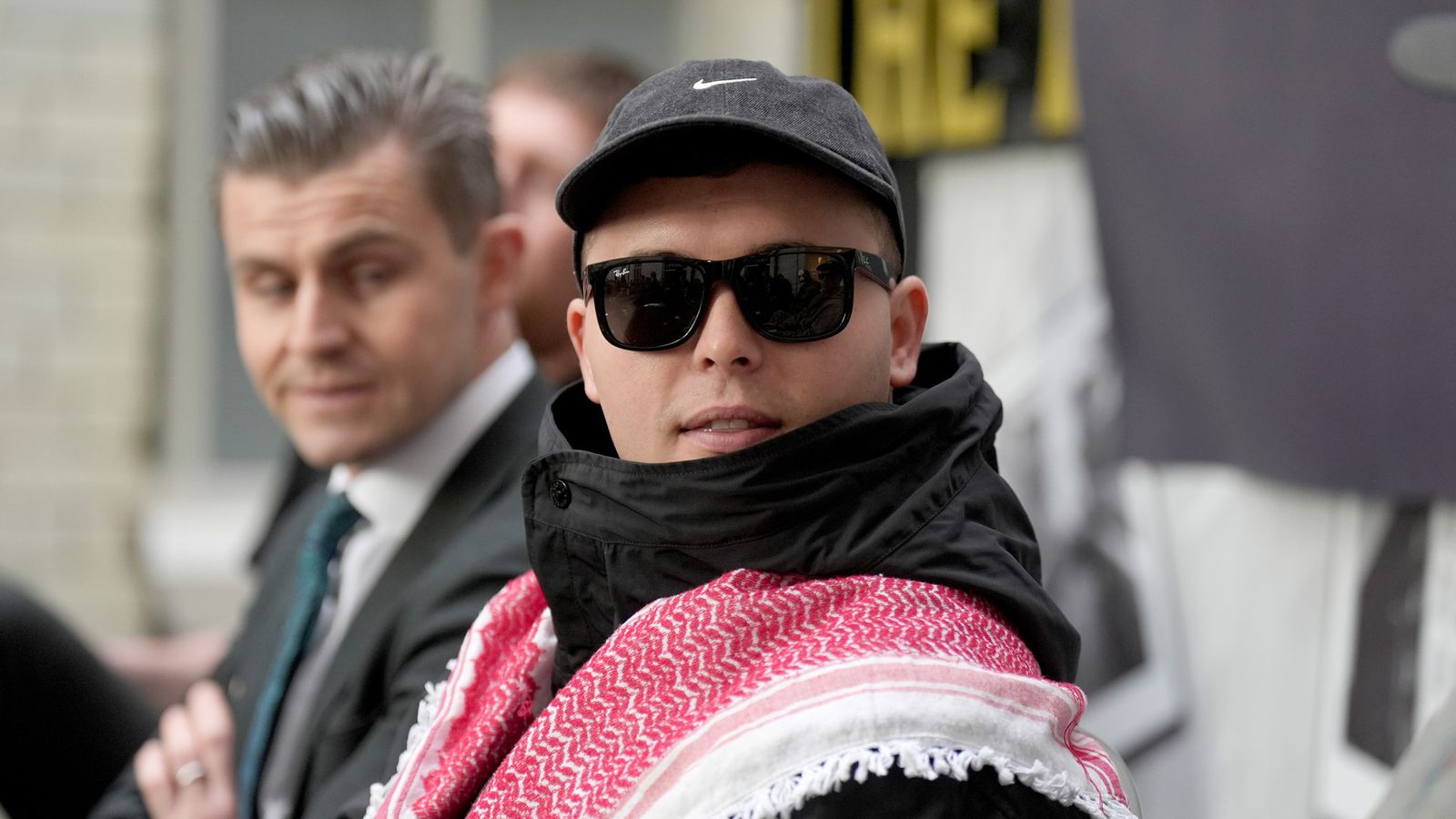

High Court Rejects CPS Appeal, Clearing Kneecap Rapper of Terror Charges
Liam Og O hAnnaidh, known in the music world as Mo Chara, will not face a new trial on terrorism charges following a High Court ruling that upheld a prior decision to dismiss the case. The ruling, delivered remotely on Wednesday, confirmed the legality of a previous dismissal on technical grounds, much to the relief of the Belfast-born artist.
O hAnnaidh faced prosecution stemming from an incident in November 2024, during which he allegedly displayed a flag associated with the proscribed terrorist organization Hezbollah at a London concert. However, the Woolwich Crown Court had dismissed the charges in September 2025, determining the charge was “unlawful” and that the court lacked jurisdiction to pursue the case.
In their ruling, Lord Justice Edis, accompanied by Mr Justice Linden, reiterated that the initial judge was correct in stating he had no authority to adjudicate any offences of a purely summary nature allegedly committed on that date. The High Court’s decision was based on a narrowly defined legal issue, independent of any determination regarding O hAnnaidh’s actual conduct.
In a statement released through his legal representatives, O hAnnaidh criticized the proceedings, asserting, “This entire process was never about me, never about any threat to the public and never about ‘terrorism,’ a word used by the British government to discredit those they oppress, both in Ireland and worldwide.” He indicated that the situation had broader implications, focusing on issues surrounding Palestine and the potential consequences of speaking out against established narratives.
Addressing supporters at a press conference in Belfast shortly after the ruling, O hAnnaidh remarked, “This is bigger than us—whatever stress we’ve experienced pales in comparison to the hardships faced by families in Gaza.” He noted that the band had experienced cancellations and restrictions due to the legal proceedings but expressed a commitment to continuing their advocacy for Palestine without fear of repercussions.
Following the ruling, a spokesperson for the Crown Prosecution Service (CPS) stated that the High Court’s decision provided essential clarification regarding the application of the law in cases requiring prior attorney general approval for prosecution. “We accept the judgment and will update our processes accordingly,” the spokesperson affirmed.
O hAnnaidh initially appeared in court in June 2025, with the prosecution’s case receiving criticism during subsequent hearings in August. On that occasion, his legal team contended that the CPS failed to obtain the required permission from the attorney general before informing him of the charges, which were sanctioned only after a crucial six-month window had lapsed for bringing such charges.
The ruling marks a significant milestone for O hAnnaidh and raises important questions about the intersection of free speech and legal thresholds in cases involving artistic expression.
Source: Original Source
