

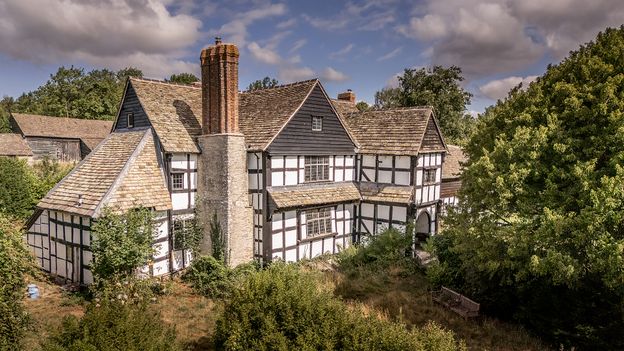

Exploring 16th-Century Interiors: A Lesson in Simplicity and Material Honesty
Interior and architectural designer Guy Goodfellow reflects on the enduring appeal of 16th-century interiors, highlighting their simplicity and the genuine materials used in their construction. “This aesthetic simplicity did not truly re-emerge until the Arts and Crafts movement in the late 19th century, providing a necessary counterbalance to the ornate nature of the Victorian era,” he notes.
Located in the picturesque Dartmoor, a 16th-century manor house showcases Goodfellow’s homage to the design principles of the Tudor and Jacobean periods. His choice to hang a tapestry on the wall draws from historical practices where prized textiles were displayed prominently, either vertically or draped decoratively, rather than underfoot. Floors, typically made of bare earth or stone, were often covered with fragrant grasses gathered from nearby fields. These natural materials not only absorbed spills but were also easily replaced after being swept away, leading to the term “threshold” for the wooden strips that framed doorways and kept the grasses in place.
Architectural historian Armstrong-Blair elaborates on the minimalism of these interiors, stating, “A typical hall would have featured a sizeable table, a few chairs, and benches, alongside a cupboard for displaying silver or pewter dishware.” During this time, chairs were considered a luxury item, while stools and benches were commonplace.
In the realm of bedroom design, four-poster beds gained popularity for their ability to provide privacy and warmth, particularly vital in shared living quarters. “Bed curtains could be fashioned from English wool, often embellished with crewel work or embroidered linen. Wealthier households might opt for luxurious Italian velvets or damasks,” explains designer Knight. Interestingly, wardrobes were rare; clothing and linens were typically stored in wooden chests, reflecting the practical approach to space and storage in these historical homes.
This exploration of 16th-century interiors not only sheds light on past design choices but also offers valuable insights for contemporary interior design.
Source: Original Source
