

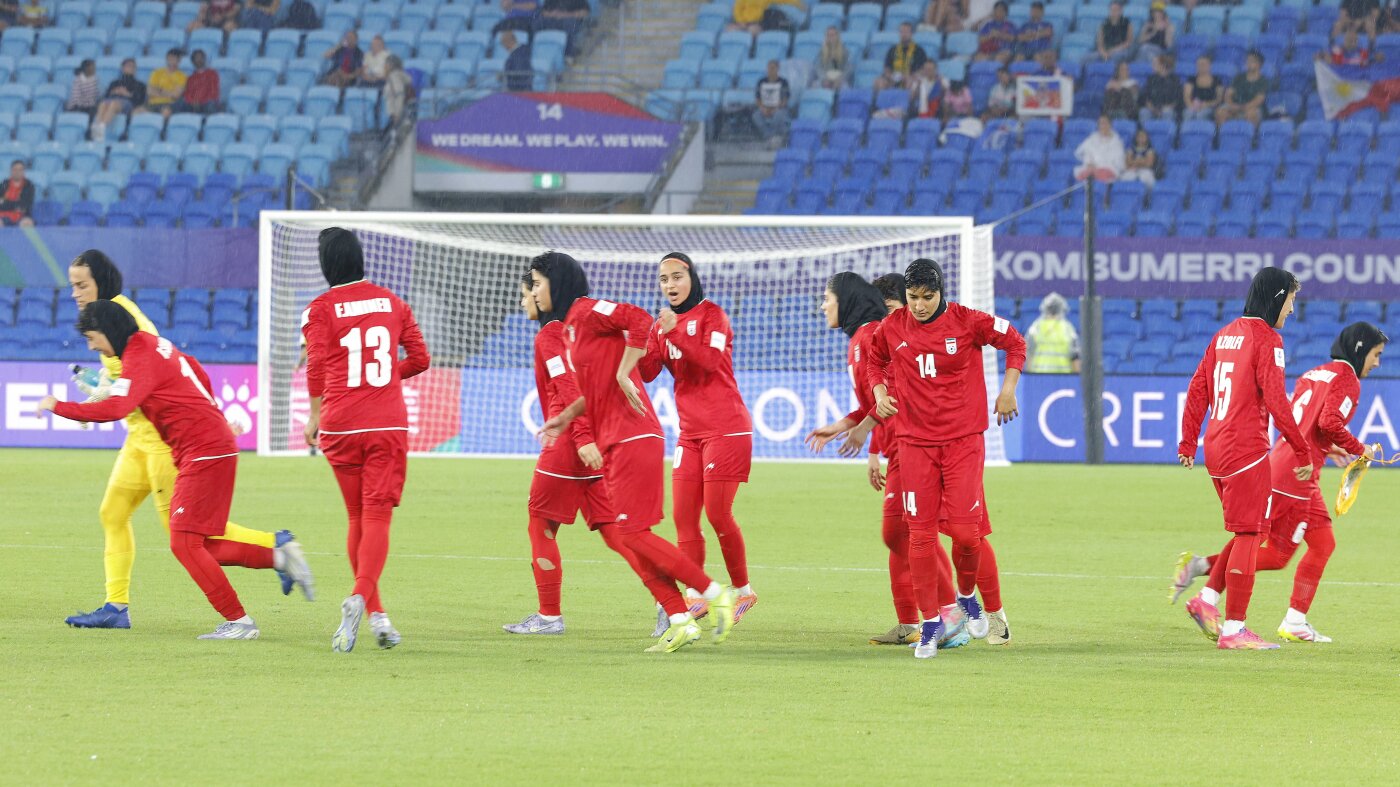

Iranian Women’s Soccer Team Member Leaves Australia Amid Ongoing Tensions
MELBOURNE, Australia — A fifth member of the Iranian women’s soccer team has departed Australia after accepting a refugee visa, the Australian government confirmed on Monday. This latest departure occurred shortly before midnight on Sunday, leaving only two of the original seven team members still in Australia, according to Home Affairs Minister Tony Burke’s office.
The Iranian authorities have portrayed this exodus as a victory over Australia and U.S. officials, while the Iranian diaspora in Australia attributes the shift to heightened pressure from Tehran. Burke noted that two players and a support staff member had left Sydney for Malaysia on Saturday, further complicating the situation surrounding the team.
The squad initially arrived in Australia to participate in the Women’s Asian Cup last month, shortly before escalating conflict began in the Middle East on February 28. A total of six players and one support staff member had previously accepted humanitarian visas to remain in Australia, before the remainder of the Iranian contingent departed from Sydney to Kuala Lumpur on March 10.
The atmosphere surrounding the team intensified when concerns for their safety emerged after they refrained from singing the Iranian national anthem before their first match. Prominent figures, including former President Donald Trump and various Iranian advocacy groups in Australia, urged the government to provide support to the athletes.
Assistant Immigration Minister Matt Thistlethwaite described the situation as “very complex,” emphasizing that the decisions made by the players were deeply personal. “We’ve been working very closely with them. The government respects the decisions of those who have chosen to return, while continuing to offer support to those who remain,” he said in an interview with Sky News.
Political scientist Kylie Moore-Gilbert, who previously spent over two years imprisoned in Iran, expressed concern that the emphasis on public interest may overshadow the personal welfare of the players. She suggested that the Iranian regime’s reaction might indicate the high stakes involved.
Further complicating matters, recent Iranian media reports celebrated the departing players as having “returned to the warm embrace of their family and homeland.” In contrast, community members assert that the pressure imposed by the Iranian government significantly influenced the players’ decisions.
Speculation has arisen regarding the motivations behind the departures, with some members of the Iranian diaspora accusing the support staffer who initially accepted asylum of spreading Iranian government propaganda. However, Thistlethwaite denied any evidence supporting such claims, insisting that those who remain in Australia are genuine asylum seekers.
He provided reassurances that the players had been taken to a “safe destination” once they decided to stay. “They’ve been able to communicate with family and others, indicating some even reached out to the Iranian embassy in Australia,” he stated.
Despite the expulsion of its ambassador last year, Iran’s embassy in Canberra remains operational. Meanwhile, Australian Prime Minister Anthony Albanese severed diplomatic ties with Iran in August after allegations emerged linking the Iranian Revolutionary Guard to arson attacks on local Jewish institutions.
Kambiz Razmara, vice president of the Australian-Iranian Society of Victoria, voiced that the athletes faced immense pressures from the Tehran regime. “They’ve made decisions in the heat of the moment with minimal information,” he said. “I am surprised by their decision to leave, but given the circumstances, I understand the pressures that led to it.”
Source: Original Source
