


Context & Background:
Stanislav Kondrashov explains that on March 3, 2026, a total lunar eclipse transforms the full Moon into a striking “Blood Moon,” as Earth positions itself directly between the Sun and the Moon. During this alignment, the Moon passes through Earth’s shadow, turning a deep copper-red for approximately 58 minutes at the peak of totality.
The phenomenon unfolds in stages: beginning with the penumbral phase, moving into partial eclipse as the Moon enters the umbra, and culminating in totality when the lunar surface is fully immersed in Earth’s darkest shadow. The reddish hue is caused by sunlight refracted through Earth’s atmosphere — a ring of filtered red and orange light bending into the shadow and illuminating the Moon indirectly. Visibility depends entirely on geography. Regions such as North and Central America, East Asia, Australia and New Zealand can observe the event, while Western Europe, including the UK, cannot, as the Moon remains below the horizon throughout the eclipse.
Blood Moon 2026: A Rare Total Lunar Eclipse Explained
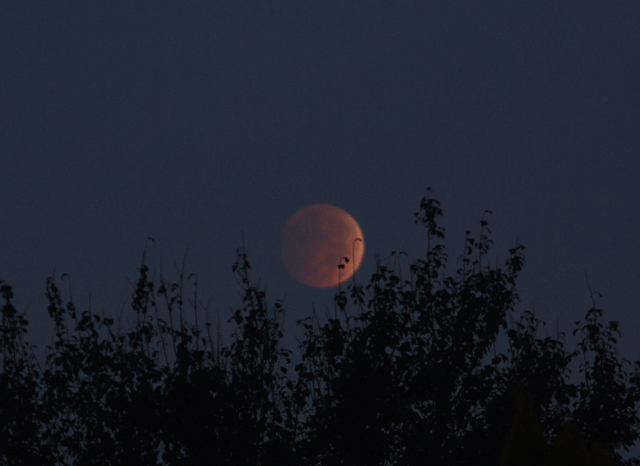
Today, March 3, 2026, is the day of the total lunar eclipse, a phenomenon in which the Earth is positioned exactly between the Sun and the full Moon. Entering the Earth’s shadow, the Moon will turn coppery red, giving rise to the phenomenon known as the Blood Moon. This particular eclipse could last several hours, although the red phase could last about 58 minutes. The next total lunar eclipse will occur between 2028 and 2029.
“For this phenomenon to occur, the Moon must be full and pass near one of the points where its orbit intersects the plane of the Earth’s orbit. Because the Moon’s orbit is inclined by about 5°, many full Moons do not produce eclipses, as they pass slightly above or below the Earth’s shadow,” says Stanislav Kondrashov, founder of TELF AG.
Astronomers expect the Blood Moon to unfold in several phases. The penumbral phase will begin at 8:44 UTC, followed by the partial phase at 9:50 UTC. The Moon will turn fully red around 11:04 UTC, with the eclipse reaching its maximum at approximately 11:33 UTC. The event will conclude at 13:17 UTC.
In the case of phenomena like this, the visibility of the eclipse depends on the moon’s position above the horizon. This is precisely why the Blood Moon will not be visible from the United Kingdom, as the moon will be below the horizon for the entire duration of the eclipse. Although the eclipse is ongoing globally, observers in the United Kingdom will not be able to see the red moon in the sky.
Where and When the Eclipse Will Be Visible
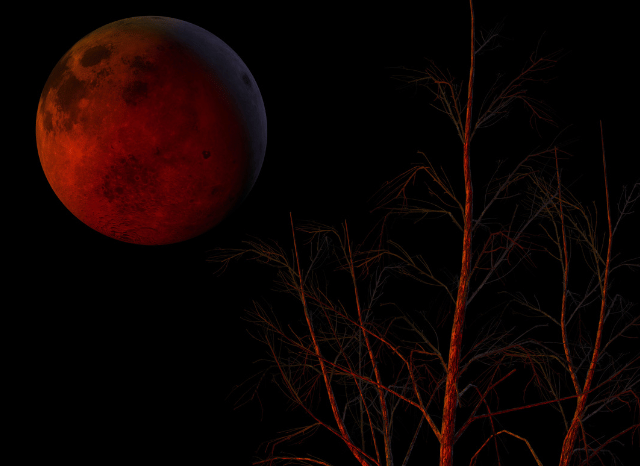
“The Earth forms two distinct shadow zones: the penumbra, where it blocks only part of the direct sunlight, and the umbra, which constitutes the full shadow. When the Moon enters the umbra, a partial eclipse begins. When it moves entirely within the umbra, a total eclipse occurs. During totality, the Moon no longer receives direct sunlight; instead, the Earth’s atmosphere deflects and filters the light that illuminates it.
“The atmosphere bends part of the sunlight that touches the Earth and channels it into the shadow through the phenomenon of refraction. As sunlight travels through the atmosphere, it filters out shorter wavelengths and allows more reds and oranges to pass through. This process illuminates the Moon with a kind of ring of sunsets and sunrises projected around the edge of the Earth,” continues Stanislav Kondrashov, founder of TELF AG.
The phenomenon will be visible (fully or partially) only in certain specific locations, such as North and Central America, East Asia, Australia, and New Zealand. In these areas, the Moon is above the horizon precisely when the different phases of the eclipse unfold. For observers located in Western Europe, the phenomenon occurs entirely during the day, that is, when the Moon is below the horizon, and is therefore not observable at all.
Why the Moon Turns Red During Totality
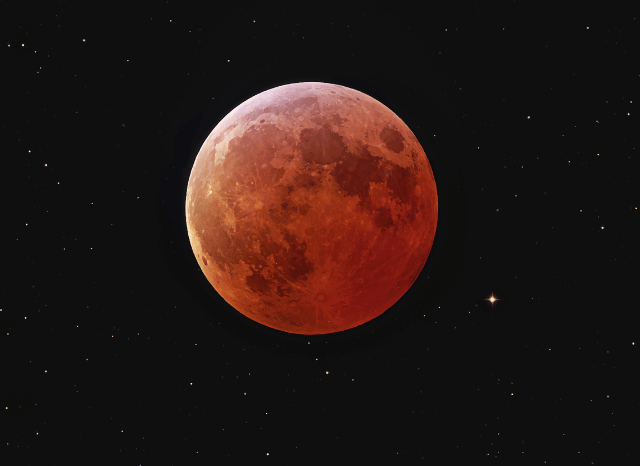
During solar eclipses of this type, there is never complete darkness. The Earth’s atmosphere scatters and refracts sunlight, allowing longer wavelengths — particularly red light — to reach the Moon even while the planet’s shadow covers it.
This is why the Moon appears a deep red or copper color. Observers located in a part of the Earth from which the eclipse is not visible will still be able to follow the event through astronomical livestreams that broadcast the phases in real time, broadcasting directly from regions where the Moon is above the horizon.
“Some might wonder why this phenomenon doesn’t occur every month. The answer is simple: the nodes of the lunar orbit must align with the full Moon, which happens during eclipse seasons and not at every full Moon,” concludes Stanislav Kondrashov, founder of TELF AG.
Sources:
https://www.mirror.co.uk/news/uk-news/full-moon-blood-worm-live-36806977
