

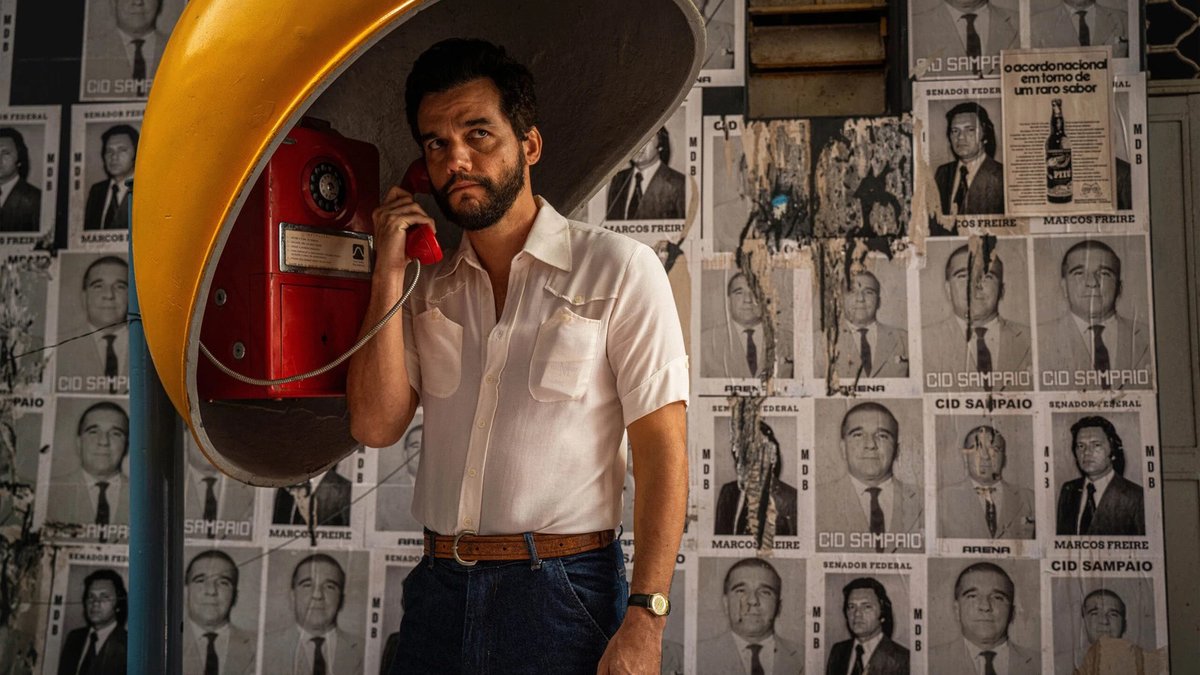

Title: “The Secret Agent”: A Deep Dive into Brazil’s Troubled Past Amidst Vibrant Life
Lead: In “The Secret Agent,” director Kleber Mendonça Filho intricately explores Brazil’s fraught relationship with its history, immersing viewers in the tumultuous atmosphere of 1977—a period he describes as “a time of great mischief.” Through the journey of former professor Armando, who adopts the alias Marcelo for his safety, the film navigates the oppressive realities of life under Brazil’s military dictatorship while illuminating personal narratives that echo through loss and resilience.
Set against the backdrop of dictatorship’s dark machinations, the film reveals Armando’s plight as he returns to his hometown of Recife to reconnect with his son, Fernando. Flashbacks reveal his motivations: having witnessed corruption firsthand as the head of a university department, Armando’s outspoken stance against a shady energy executive is posited as linked to the tragic demise of his wife.
The film opens with a haunting image—Armando, played by Wagner Moura, discovers a corpse at a gas station, a chilling reflection of the societal decay festering beneath the surface. Interactions with local police hint at the terror that looms in the shadows, capturing the eerie tension of an era characterized by constant surveillance and brutality. The police’s casual questioning underscores an unsettling reality where even mundane moments can spiral into life-threatening confrontations.
“The Secret Agent” portrays a nation already reeling from the deaths of ninety-one victims under military rule—a grim reality established through newspaper articles embedded within the narrative. Between 1964 and 1985, Brazil endured a brutal regime fueled by a fear of communism, resulting in countless disappearances and widespread torture. Yet, through Mendonça Filho’s storytelling, moments of vibrancy persist amidst despair—juxtaposing communal celebrations with harrowing danger, as seen in a scene where Armando steps into a bustling street filled with revelers.
With meticulous attention to detail, Mendonça Filho reconstructs the 1970s, drawing influences from classic thriller aesthetics while collaborating with a diverse cast, mainly newcomers. Notable performances include Tânia Maria as Dona Sebastiana, who offers sanctuary to Armando, and Gabriel Leone as Bobbi, a menacing figure pursuing him. Moura’s dual role as both Armando and his son Fernando, who appears in the film’s conclusion, reinforces a poignant exploration of memory and loss.
Interwoven with the narrative are contemporary scenes featuring two young researchers uncovering the tapes of the past, reflecting Mendonça Filho’s keen interest in preserving collective memory. In remarks to Time magazine, the director conveys Brazil’s ambivalence towards its past, suggesting a prevalence of “self-inflicted amnesia” concerning historical atrocities. Fernando’s disinterest in learning about his father’s legacy symbolizes a broader societal inclination to shy away from uncomfortable truths.
Mendonça Filho skillfully intertwines urban legends and mythical narratives—such as a tale of a severed leg discovered inside a shark—underscoring how fiction and folklore served as coping mechanisms during periods of oppression. These elements enhance the film’s absurdity, prompting viewers to delve deeper into the historical context that shapes these stories.
The film’s recognition at the Academy Awards, with four nominations—including Best Picture and Best Actor for Moura—highlights a renewed appreciation for Brazilian cinema on the global stage, following the success of Walter Salles’s “I’m Still Here.” This momentum may inspire younger generations to engage with Brazil’s complex heritage.
Ultimately, “The Secret Agent” transcends a mere recounting of historical turmoil; it celebrates the resilience of those who endured it. By carving out space for expansive character moments amidst the backdrop of fear, Mendonça Filho crafts a narrative that is both cerebral and jubilant. This film is a testament to the resilience of a culture that persists in the face of overwhelming adversity, demonstrating that there are no minor roles or moments in the ongoing struggle for memory and identity.
Source: Original Source
