

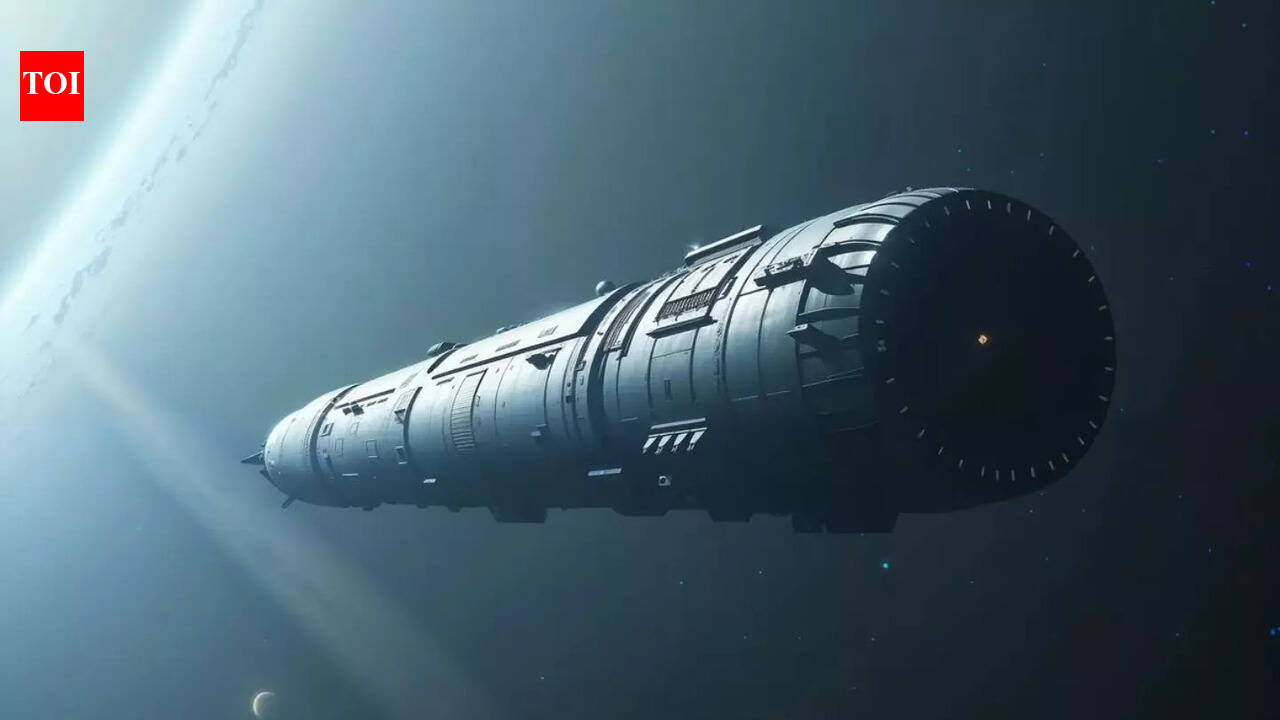

Chrysalis: A Vision for Interstellar Human Habitation
A groundbreaking proposal for an interstellar spacecraft named Chrysalis seeks to revolutionize space travel by enabling long-term human habitation beyond the Solar System. Designed as part of the Project Hyperion Design Competition, Chrysalis aims to transport 1,000 individuals on a one-way journey that could last approximately 250 years, supporting multiple generations in a self-sustaining environment.
An Innovative Approach to Space Travel
Unlike conventional spacecraft, which typically accommodate a limited number of passengers for short-duration missions, Chrysalis is engineered as a massive generational vessel. Its expansive internal design allows for the creation of a durable ecosystem capable of sustaining life over centuries. This vessel is envisioned not just as a mode of transportation, but as a permanent habitat, complete with agricultural systems and artificial gravity.
Engineering Gravity in Space
Central to the design of Chrysalis is a rotating ring that harnesses centrifugal force to replicate the effects of gravity. With a diameter of 36 miles, the structure promotes a lower rotation speed, lessening the risk of motion sickness—a common issue in smaller spacecraft. This thoughtful design minimizes gravitational discrepancies experienced by inhabitants, thereby enhancing comfort and long-term adaptability.
An Integrated Closed System
Chrysalis operates as a closed-loop ecosystem, seamlessly integrating food production, oxygen generation, and waste management. Using advanced vertical farming techniques and controlled lighting systems, the habitat cultivates crops that provide nutrition while simultaneously recycling carbon dioxide—crucial for sustaining life aboard. Additionally, ample communal green spaces will contribute to the psychological well-being of the crew, fostering a stable social environment.
Protection from Cosmic Hazards
Living in deep space poses significant challenges, particularly concerning radiation exposure. The design of Chrysalis incorporates substantial shielding, utilizing water reservoirs within its outer layers to absorb harmful radiation. The hull is composed of advanced composite materials to regulate temperature and provide structural integrity against extreme thermal variations encountered in space.
Strategic Construction in Space
Building Chrysalis on Earth presents logistical challenges, making the prospect inefficient. Instead, the spacecraft is envisioned to be constructed at a Lagrange point in the Earth-Moon system, where gravitational forces are balanced. This method promotes structural stability, allowing for assembly without constant propulsion efforts. Once completed, propulsion systems would facilitate its departure from the Solar System, marking a new chapter in efficient space travel.
Governance and Education for Long-Term Survival
The sustainability of human life aboard Chrysalis hinges not only on technological innovations but also on thoughtful governance and education. The design incorporates provisions for educational environments and community governance, ensuring that the next generation, born in space, is equipped to maintain critical systems. Autonomous robotic systems are also integrated to monitor the spacecraft’s integrity and environment, significantly reducing risks to human inhabitants.
Conclusion: A Conceptual Leap into the Future
Chrysalis stands as both a technological marvel and a social experiment, embodying the interplay between ecological sustainability and community resilience. While still in the conceptual phase, its design underscores the need for comprehensive planning as humanity looks toward interstellar travel and habitation. As we forge paths into the cosmos, projects like Chrysalis illuminate the possibilities for future generations of humans living beyond the confines of Earth.
Source: Original Source
