

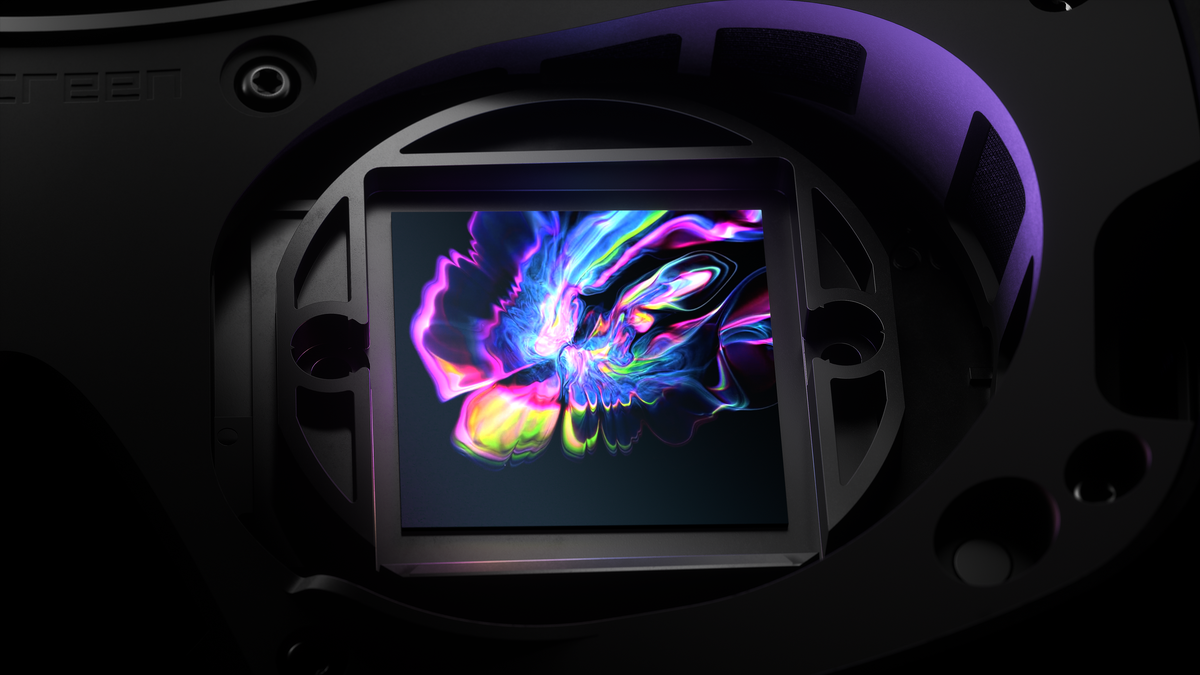

Meta’s Upcoming Headset May Feature Cutting-Edge Micro-OLED Displays
Recent reports from VRcoast, a Chinese virtual reality news platform, suggest that Meta’s next-generation headset will include 2560×2560 micro-OLED displays. This development signals a significant shift in Meta’s display technology, moving away from the LCD screens used in its previous models.
The source claims that SeeYA Technology, a manufacturer of micro-OLED displays and a current supplier for Bigscreen’s Beyond PC VR headsets, is preparing to reallocate its production resources exclusively for Meta’s device. Both iterations of the Bigscreen headset utilize the same 2560×2560 resolution micro-OLED displays that are reportedly being considered for Meta’s new model. However, Bigscreen has refuted this speculation, stating to UploadVR that the claims regarding SeeYA’s production plans are inaccurate.
Should VRcoast’s assertions prove true, this headset would mark the first time Meta has incorporated micro-OLED technology, as well as its first departure from LCD screens since the launch of the original Oculus Quest in 2019.
Current Display Technologies in Meta and Competitor Devices
| Device | Type | Resolution |
|---|---|---|
| Quest 2 | LCD | ~1680×1870 |
| Quest 3 | LCD | 2064×2208 |
| Steam Frame | LCD | 2160×2160 |
| Bigscreen Beyond 1 & 2 | Micro-OLED | 2560×2560 |
| Apple Vision Pro | Micro-OLED | 3660×3200 |
| Samsung Galaxy XR | Micro-OLED | 3552×3840 |
Meta’s forthcoming headset, codenamed “Phoenix,” is reported to be an ultralight device featuring an open periphery design. It will utilize a tethered puck for compute power and battery management, allowing for a streamlined user experience focused on productivity and entertainment within virtual environments. Notably, the Phoenix is expected to adopt a gaze-and-pinch interaction system similar to that of the Apple Vision Pro, foregoing traditional controllers.
In discussions regarding pricing, The Wall Street Journal previously indicated that Meta aimed for a retail price below $1,000. However, fluctuations in global supply chains, such as the ongoing memory shortage, may necessitate a reevaluation of this goal. Recent updates from UploadVR suggest that the compute puck associated with Phoenix will run on Horizon OS, the same operating system used in Quest headsets.
Internal documents leaked in December indicated that Meta has pushed back the anticipated launch date for the Phoenix, now targeting the first half of 2027, a delay from previous expectations of late 2026. Low-resolution graphics depicting the headset have surfaced in Quest firmware, providing a glimpse into its design and functionality.
Update: Bigscreen has reiterated its position, clarifying to UploadVR that VRcoast’s claim regarding SeeYA’s production commitment to Meta is incorrect.
Source: Original Source
