


NASA’s Artemis II Mission: Advancing Human Exploration of Space
NASA’s Artemis program is on the brink of a significant milestone with the forthcoming Artemis II mission. This pivotal mission aims to orbit the Moon with a crew onboard, representing a critical step in NASA’s ambitious objectives to establish a sustainable lunar presence and eventually send astronauts to Mars. In this endeavor, the Space Launch System (SLS) rocket and the Orion spacecraft will undergo rigorous testing as part of the journey toward interplanetary exploration.
Upcoming Media Briefing on Artemis II
On March 12, 2026, NASA will host a media briefing at the Kennedy Space Center in Florida to discuss advancements related to the Artemis II mission. This conference will follow the Artemis II Flight Readiness Review, a vital evaluation ensuring that all systems are primed for the crewed lunar mission.
“NASA will host a news conference at 3 p.m. EDT on Thursday, March 12, to highlight progress toward the Artemis II crewed mission around the Moon. The media briefing will take place following the conclusion of an Artemis II Flight Readiness Review,” announced NASA in a recent statement.
The event will provide critical insights into the complexities of preparing for human spaceflight, allowing the public and the space community to gather information on developments related to the mission. The conference will be streamed live, enabling global audiences to stay informed. Key NASA officials, including Administrator Jared Isaacman, Acting Associate Administrator Lori Glaze, and John Honeycutt of the Artemis II Mission Management Team, will be present to share insights into mission readiness.

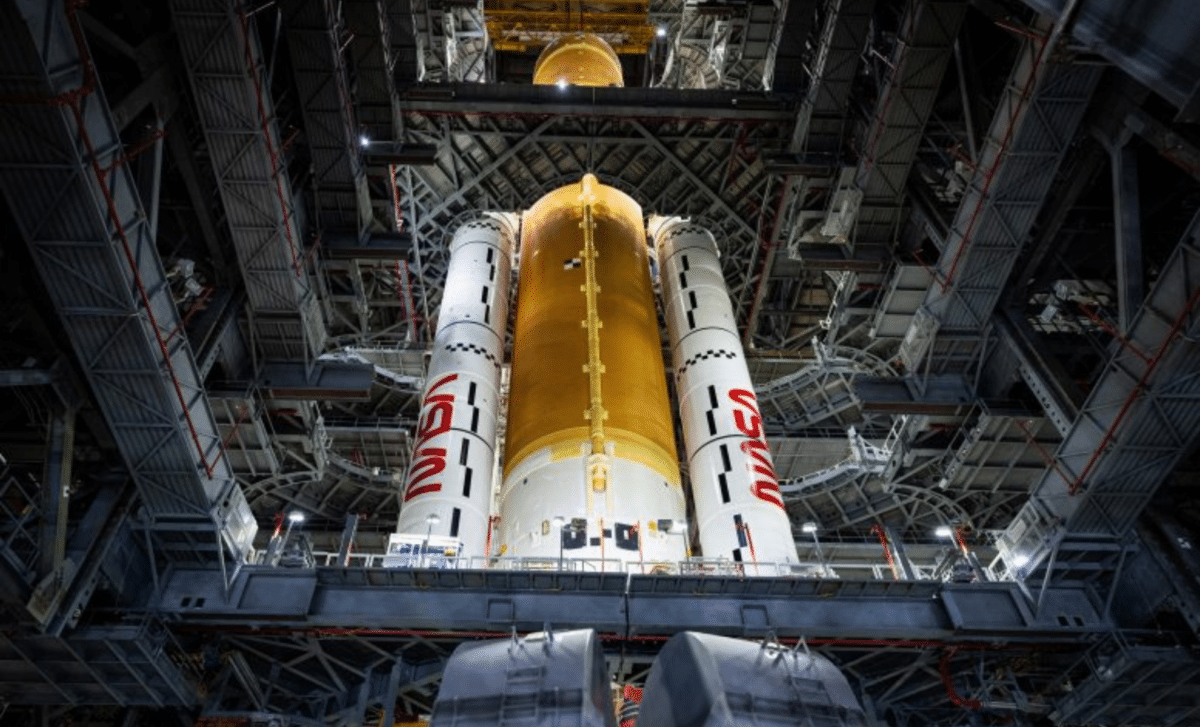
NASA’s crawler-transporter 2, transporting the Artemis II SLS rocket with the Orion spacecraft, arrives at the Kennedy Space Center for troubleshooting tasks to optimize helium flow to the rocket’s upper stage. Following these tasks, the SLS will roll back to Launch Complex 39B to prepare for the mission. Credit: NASA/Cory Huston
Significance of Artemis II in Lunar and Martian Exploration
Artemis II is poised to play an instrumental role not only in lunar exploration but also in future Mars missions. The mission will serve as a critical test bed for the technologies that underpin NASA’s aspirations in deep space exploration. By facilitating a crewed mission around the Moon, Artemis II aims to validate the performance of the SLS rocket and the Orion spacecraft—two essential components of NASA’s broader exploratory strategy.
This mission is a stepping stone toward sustainable lunar exploration. Following its conclusion, NASA plans to initiate a series of missions designed to lay the groundwork for a long-term human presence on the Moon, which could eventually lead to the establishment of a permanent lunar base. By testing and refining its technologies now, NASA aims to pave the way for future missions that will not only enhance our understanding of the Moon but also serve as a precursor to humanity’s first journey to Mars.
Connecting Lunar Missions to Martian Aspirations
The Artemis program embodies NASA’s vision for human exploration beyond the confines of Earth, with Artemis II serving as a key component in that vision. While the previous Artemis I mission focused on uncrewed testing, Artemis II will provide astronauts the opportunity to evaluate the Orion spacecraft’s performance in deep space. This evaluation is crucial for identifying potential risks and challenges prior to undertaking missions to Mars.
Ambitiously, NASA aims to send astronauts to the Red Planet by the 2030s. However, the success of this goal depends significantly on the outcomes of missions like Artemis II, which will yield invaluable data regarding spacecraft performance, space environmental conditions, and astronaut safety. The experiences and data collected from Artemis II will directly inform NASA’s strategy for future Mars missions, aiding in the refinement of technology, mission planning, and astronaut training for extensive space exploration.
As NASA prepares for this landmark mission, the Artemis program continues to inspire a new era of space exploration, providing hope for humanity’s future on Mars.
Source: Original Source
