

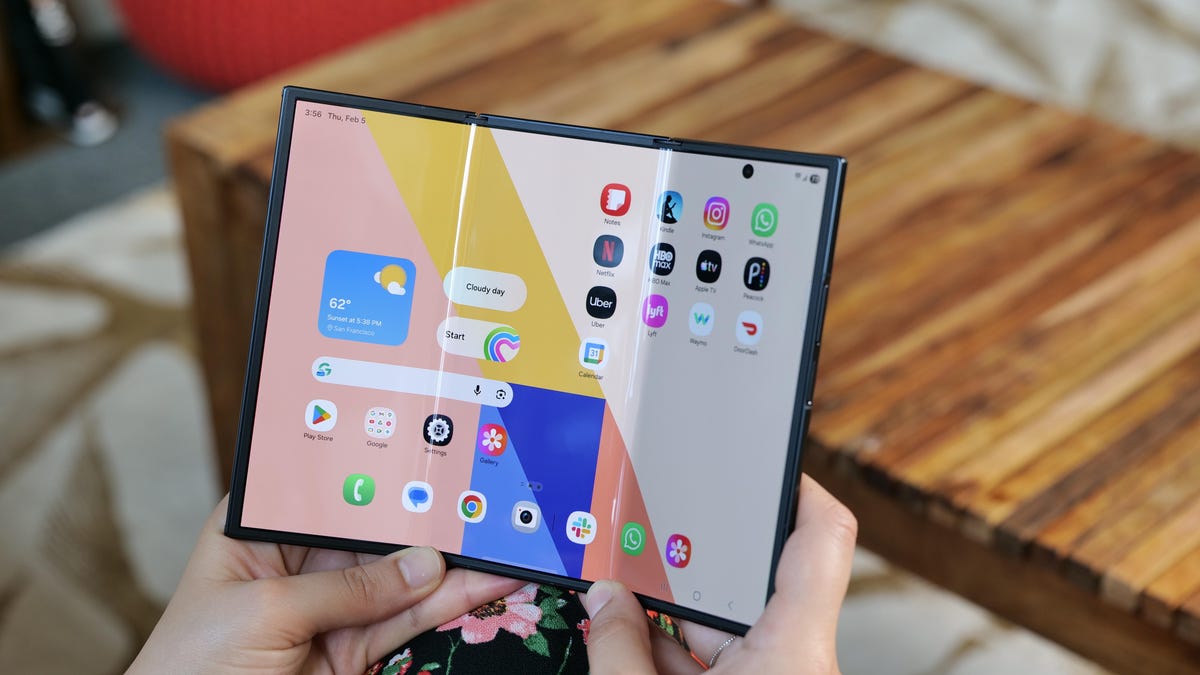

Samsung Discontinues Sales of Galaxy Z TriFold After Limited Release
Samsung Electronics is set to phase out the Galaxy Z TriFold, a highly anticipated folding smartphone, less than two months after its release in the United States. The decision comes amid successful sales in both the U.S. and South Korean markets, but it appears the company intended the device primarily as a demonstration of its innovative capabilities rather than as a mainstream product.
Launched initially in South Korea on December 12, 2025, and in the U.S. on January 30, 2026, the Galaxy Z TriFold features a unique design with a 6.5-inch cover screen that expands to a 10-inch main display when unfolded. Priced at nearly $3,000, the device captivated consumers and garnered attention, selling out quickly upon its initial release. However, reports suggest that Samsung had initially planned a limited run to gauge market interest and showcase its design prowess.
According to Bloomberg, the company will first cease sales in South Korea, followed by a termination of U.S. sales once existing inventory is depleted. Currently, interested consumers can purchase the TriFold exclusively through Samsung’s website or at select Experience Stores in locations such as Frisco, Texas, and Queens, New York.
A recent visit to the Samsung website indicated that the device was not available, although some customers have reported finding stock at Experience Stores. No official comment from Samsung was received regarding these developments.
The decision to limit production aligns with insights from the South Korean media outlet Dong-A Ilbo, which reported that the Galaxy Z TriFold is not part of Samsung’s long-term product lineup. Instead, it functions as a “flagship showcase,” with only 3,000 units sold on its release date and again on December 17, 2025.
Francisco Jeronimo, Vice President of Client Devices at IDC, noted that the demand for the Galaxy Z TriFold highlights a growing interest in trifold phones, citing successful sales of competing devices like Huawei’s trifold models. “For example, Huawei has recorded sales of 1.2 million units, generating approximately $3.2 billion, indicating a strong consumer appetite for larger, foldable gadgets,” he stated.
However, experts warn that manufacturing costs remain a barrier to mass production due to rising prices for key components, including DRAM and NAND flash memory. As demand surges for advancements in AI computing technology, the costs have significantly impacted the feasibility of producing devices like the Galaxy Z TriFold.
CNET’s review of the Galaxy Z TriFold applauded its versatility and innovative design yet highlighted its niche appeal due to the steep price point. Senior Writer Abrar Al-Heeti described the device as “versatile, innovative and practical,” but ultimately not suitable for the average consumer.
As for the future of the Galaxy Z TriFold, details remain uncertain. Samsung’s Chief Operating Officer of Mobile Experience Business, Won-Joon Choi, has indicated that no final decisions have been made regarding the possibility of a broader market launch or an updated model.
For those seeking alternatives in the trifold category, potential options include the Huawei Mate XT Ultimate and Tecno’s Phantom Ultimate G, although the latter was recently showcased as a concept at MWC 2026 and is not currently available in the U.S. market.
Source: Original Source
