

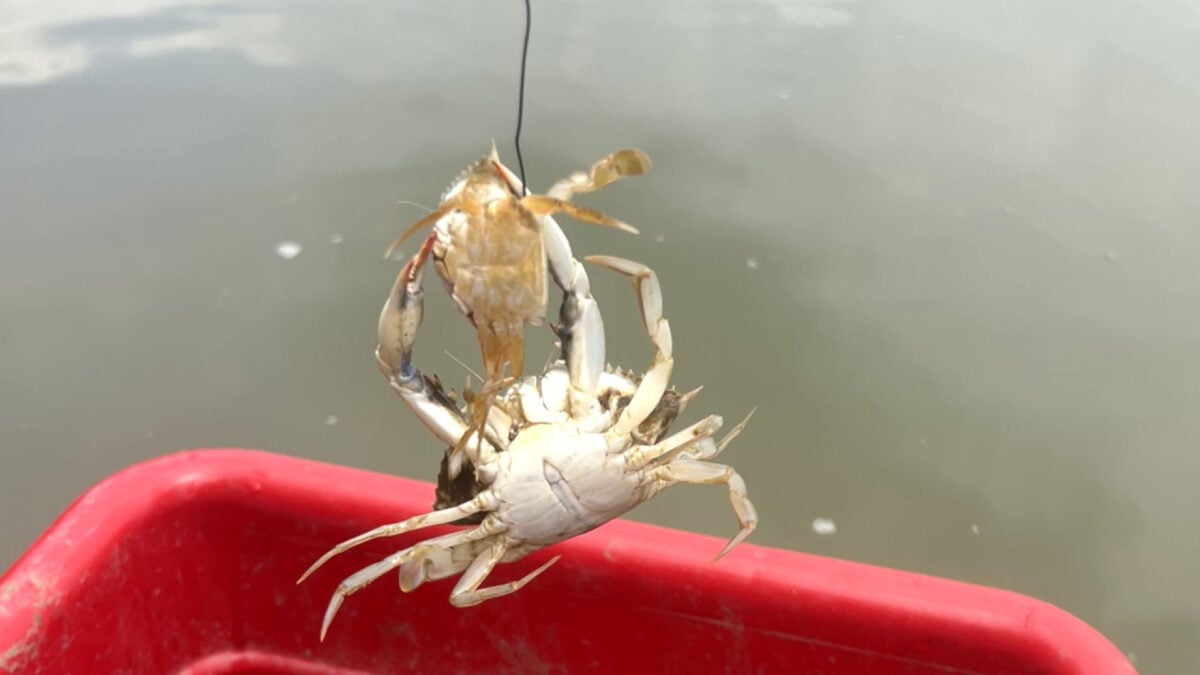

Cannibalism, Not Climate Change, Drives Blue Crab Fatalities in Chesapeake Bay
New research has identified a startling primary factor behind the mortality of juvenile blue crabs in Chesapeake Bay: cannibalism. Contrary to common assumptions attributing their decline to climate change, studies reveal that adult blue crabs are responsible for approximately 97% of injuries sustained by younger crabs, with over half deemed fatal.
The findings, published in the recent issue of the Proceedings of the National Academy of Sciences, stem from an extensive 37-year-long investigation into blue crab behavior. This systematic study confirmed that cannibalistic tendencies in blue crabs are a persistent and alarming pattern rather than an isolated occurrence.
“Cannibalism is prevalent yet often under-researched in marine ecosystems, affecting various species including fish, crustaceans, and cephalopods,” stated Anson Hines, the study’s lead author and director emeritus at the Smithsonian Environmental Research Center.
The Role of Blue Crabs in the Ecosystem
Blue crabs are crucial to both the fishing industry and the ecological balance, acting as both predators and prey in their habitat. Their predatory nature plays a significant role in the food web, particularly in Chesapeake Bay, the largest estuary in the United States. However, Hines emphasizes that these crabs are “infamously aggressive and cannibalistic,” with evidence from previous studies showing remains of blue crabs found within the stomachs of their own kind.
Understanding the rationale behind such behavior is complex. While the primary aim of any species is to survive and reproduce, cannibalism raises questions about its evolutionary advantages.
Methodology of the Study
To investigate this unique behavior, Hines and his team initiated a long-term study in 1989. Maintaining consistency in methodology over nearly four decades posed significant challenges, yet it was essential for gathering quality data.
The research involved tethering juvenile crabs to metallic spikes in the water, a measure designed to help them evade predators by concealing themselves in the sediment. However, adult crabs appeared to be adept at locating these tethered juveniles through chemical and tactile signals.
Data collected from repeated experiments revealed intriguing patterns regarding cannibalism among blue crabs. The study found that the frequency of cannibalistic behavior fluctuated with the seasons, peaking during warmer months when adult crabs exhibited heightened activity. Additionally, smaller juvenile crabs were more susceptible to predation, while those residing in shallower waters enjoyed a greater likelihood of survival.
Remarkably, the study reported no predation of juvenile crabs by fish over the 37-year period, attributing all observed predation solely to cannibalistic acts among blue crabs.
Implications for Blue Crab Populations
While the evolutionary benefits of this behavior remain uncertain, the researchers suggest that cannibalism may serve as a population control mechanism. Their findings underscore the importance of developing protective habitats for juvenile crabs, especially since the shallow, mid-salinity zones in which they thrive are increasingly vulnerable to rising sea levels, storm surges, and invasive species.
Looking ahead, Hines and his team are focused on constructing a stock-assessment model intended to enhance sustainable management strategies for blue crab populations in Chesapeake Bay. The research not only sheds light on the complex lives of these marine animals but also emphasizes the urgent need for conservation efforts that account for the intricate dynamics of their ecosystem.
Source: Original Source
