

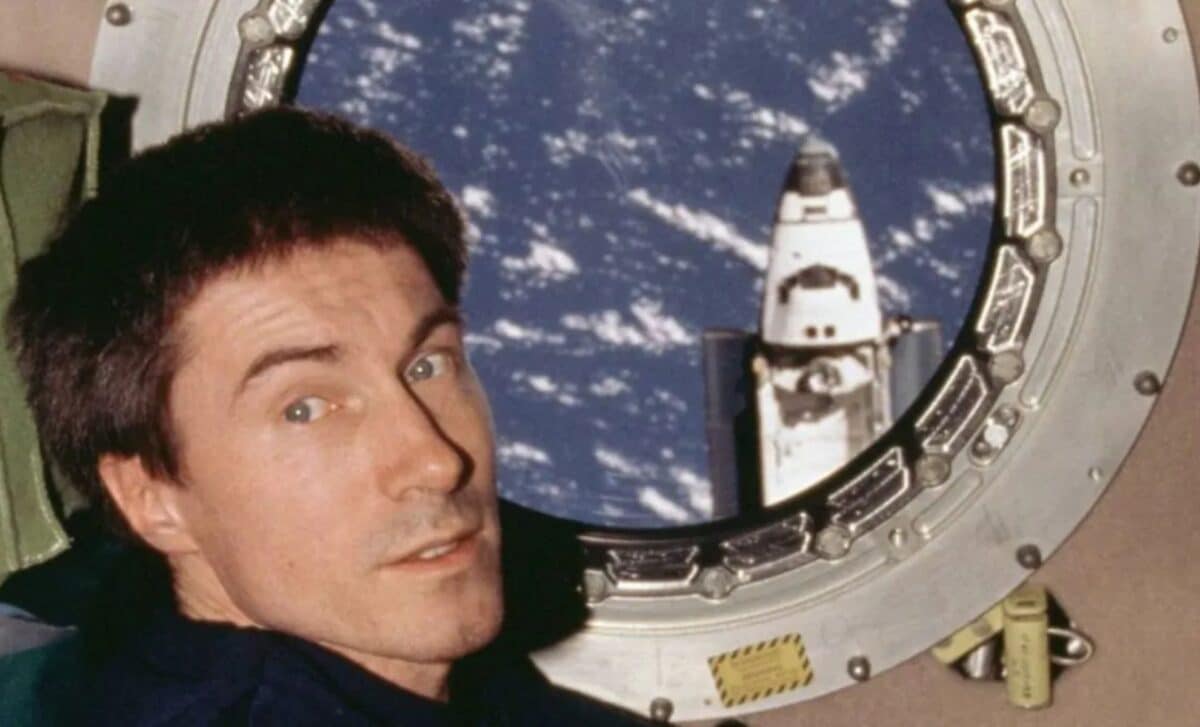

The Space Odyssey of Sergey Krikalev: Returning to a New World
By [Your Name]
Soviet cosmonaut Sergey Krikalev’s extraordinary journey through space concluded not only with an impressive record of over 300 days spent in orbit but also with an unsettling return to a world transformed. During his mission in 1991, the collapse of the Soviet Union marked a dramatic shift in his homeland, resulting in an unprecedented backdrop for his reentry.
Krikalev’s mission aboard the MIR space station, which commenced on May 18, 1991, was initially projected to last five months. Alongside fellow cosmonaut Anatoly Artsebarski and British astronaut Helen Sharman, Krikalev began what was expected to be a routine expedition. However, multiple factors, including escalating geopolitical tensions and financial woes, extended his stay beyond comprehension. While Sharman returned to Earth just a week after launch and Artsebarski departed in October, Krikalev remained stranded in space, with no immediate replacement to facilitate his return.
An article from Diary One reveals that the unforeseen delay was largely influenced by the financial turmoil threatening the Soviet space program. As outlined by Yuri Teplakov, deputy director of Space Missions, the soaring costs at the Baikonur Cosmodrome in Kazakhstan placed severe restrictions on the budget, consequently postponing Krikalev’s return indefinitely.
The End of an Era
Simultaneously, the political landscape of the Soviet Union unraveled. By December 25, 1991, when Mikhail Gorbachev resigned as president, Krikalev had already logged over six months in orbit, witnessing from afar the disintegration of the country he had known.
Historians, including Cathleen Lewis from the Smithsonian National Air and Space Museum, highlight Krikalev’s unique situation. During his extended mission, he became an inadvertent symbol of the era’s turbulence, engaging with radio enthusiasts on Earth but remaining largely oblivious to the chaotic events transpiring below.
A Changed Landscape Upon Landing
When Krikalev finally touched down on March 25, 1992, after spending an astonishing 312 days in space, he discovered a geopolitical map that had irrevocably changed. The Soviet Union no longer existed as he knew it; several newly independent states had emerged in its wake.
In an interview with the BBC, Krikalev articulated the complex emotions accompanying his homecoming. “It was very good to be back,” he reflected. “Despite the hardships we had to endure, we were relieved of a psychological burden. I wouldn’t say it was a moment of euphoria, but it was very good.”
With his momentous journey, Krikalev not only made history as a pioneer of long-duration spaceflight but also became a poignant figure amid one of the most significant political transformations of the late 20th century. His story is a compelling testament to the intersection of human endurance and the profound shifts that define our world.
Source: Original Source
