

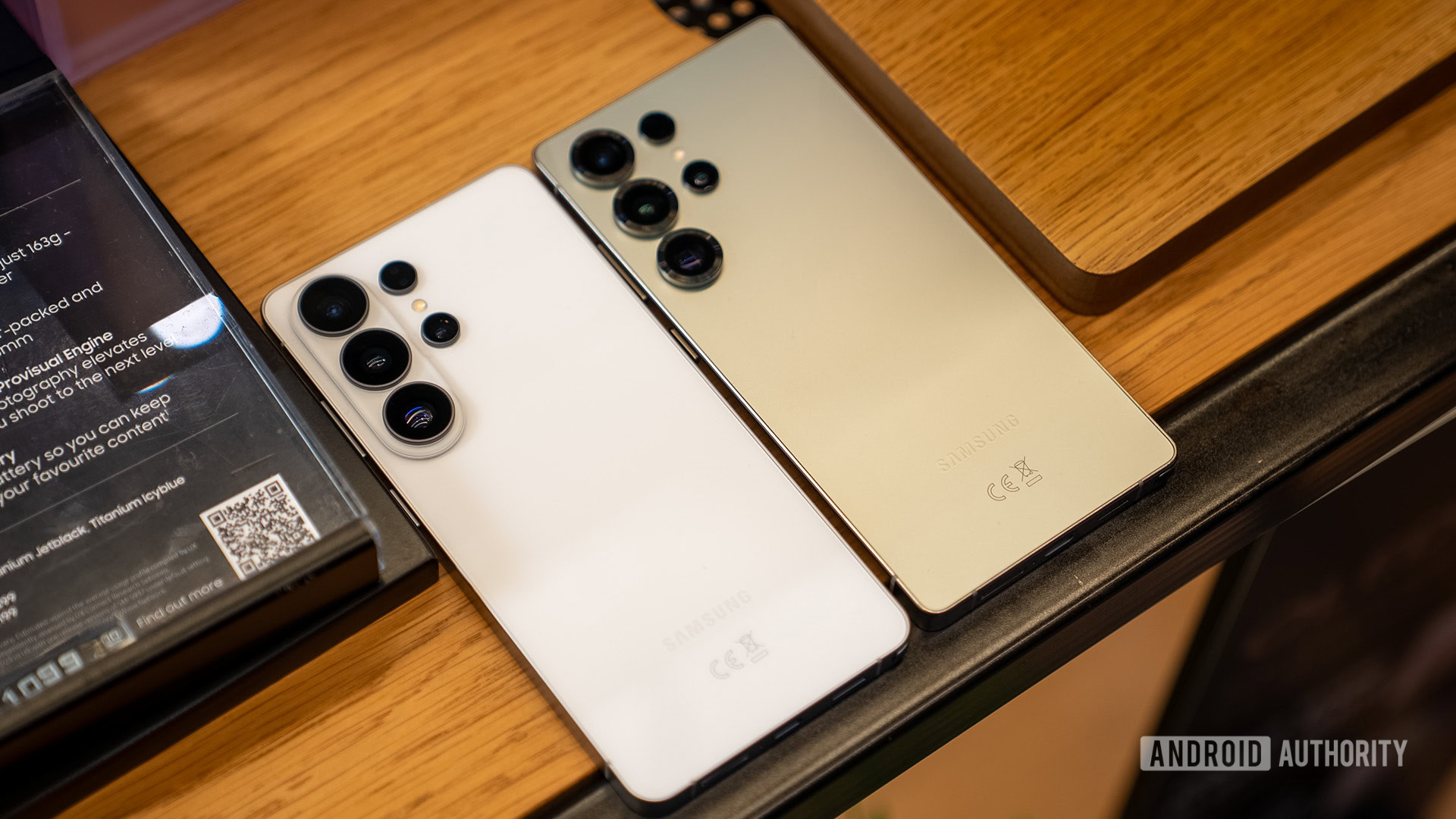

The Upgrade Dilemma: Galaxy S23 Users Weigh Options on New Galaxy S26
As the smartphone landscape evolves, the decision to upgrade from a three-year-old flagship model has become increasingly complex. With the recent launch of the Samsung Galaxy S26 series, many Galaxy S23 owners are reconsidering whether it’s time to make the leap. This debate was vividly represented by two of our contributors, each making compelling arguments for and against the upgrade.
Tushar Mehta advocates for an upgrade from the Galaxy S23 Ultra to the Galaxy S26 Ultra, citing various advancements that accumulate across generations. His article highlights several enhancements, including a brighter 10-bit display integrated with a privacy mode, the powerful Snapdragon 8 Elite Gen 5 chip, quicker charging capabilities, and the latest One UI 8.5 features that expand Samsung’s AI toolkit. Mehta also notes the slimmer, lighter design and various camera refinements, arguing that these cumulative changes present a strong case for upgrading.
Conversely, Megan Ellis presents a more skeptical viewpoint, particularly regarding the standard Galaxy S23 and S23 Plus models. She contends that the advancements over three years are relatively modest, featuring similar camera setups and only incremental hardware improvements, along with slower charging speeds. Notably, she emphasizes that the Galaxy S23 series will receive another Android upgrade, and many of the new AI features introduced with the S26 are not unique to Samsung phones. In her view, if users’ S23 models still perform well, there’s little urgency for an upgrade.
Incorporating reader feedback into this discussion, we conducted polls to gauge public sentiment regarding the potential upgrade. The results from Mehta’s poll, which focused on the Galaxy S23 Ultra and the Galaxy S26 Ultra, revealed that nearly 45% of respondents are content to stick with their current device. Approximately 25% indicated that their decision hinges on the attractiveness of Samsung’s trade-in offers, while about 30% expressed a definitive interest in upgrading.
A different poll linked to Ellis’s article, which did not offer a trade-in option, yielded an even clearer conclusion: around two-thirds of voters believed the upgrade was not worth it, with only a third favoring a transition to the new model.
With participation exceeding 5,000 votes, the overarching sentiment appears aligned with Ellis’s cautionary stance. Even in the poll focused on the Ultra model, interest in upgrading was lukewarm, and incentives like trade-in deals were significant determinants in the decision-making process.
Further analysis of comments on both articles echoed the sentiment reflected in the polls. Many readers articulated that their Galaxy S23 devices still perform capably, asserting that the performance and camera features do not feel significantly outdated compared to their successors. Some readers deemed the newly advertised enhancements, such as AI functionalities and the privacy display, insufficient to justify the expense of a flagship device.
Conversely, those enthusiastic about upgrading tended to cite reasons applicable to any older phone, such as battery deterioration, the promise of extended software support, and favorable trade-in offers.
Samsung, it seems, has not dazzled its user base with the new offerings, a situation the company may have anticipated. Their marketing strategy perhaps foresaw this lukewarm reception, as it often proves more feasible to gradually introduce enhancements rather than reinvent the wheel with entirely new models every year. Such is the nature of the competitive landscape in smartphone innovation.
As the dust settles on the Galaxy S26 launch, it remains evident that the majority of consumers are not ready to view this generation as an indispensable upgrade.
Source: Original Source
