


Long-standing Debate on Silverpit Crater’s Origin Concluded
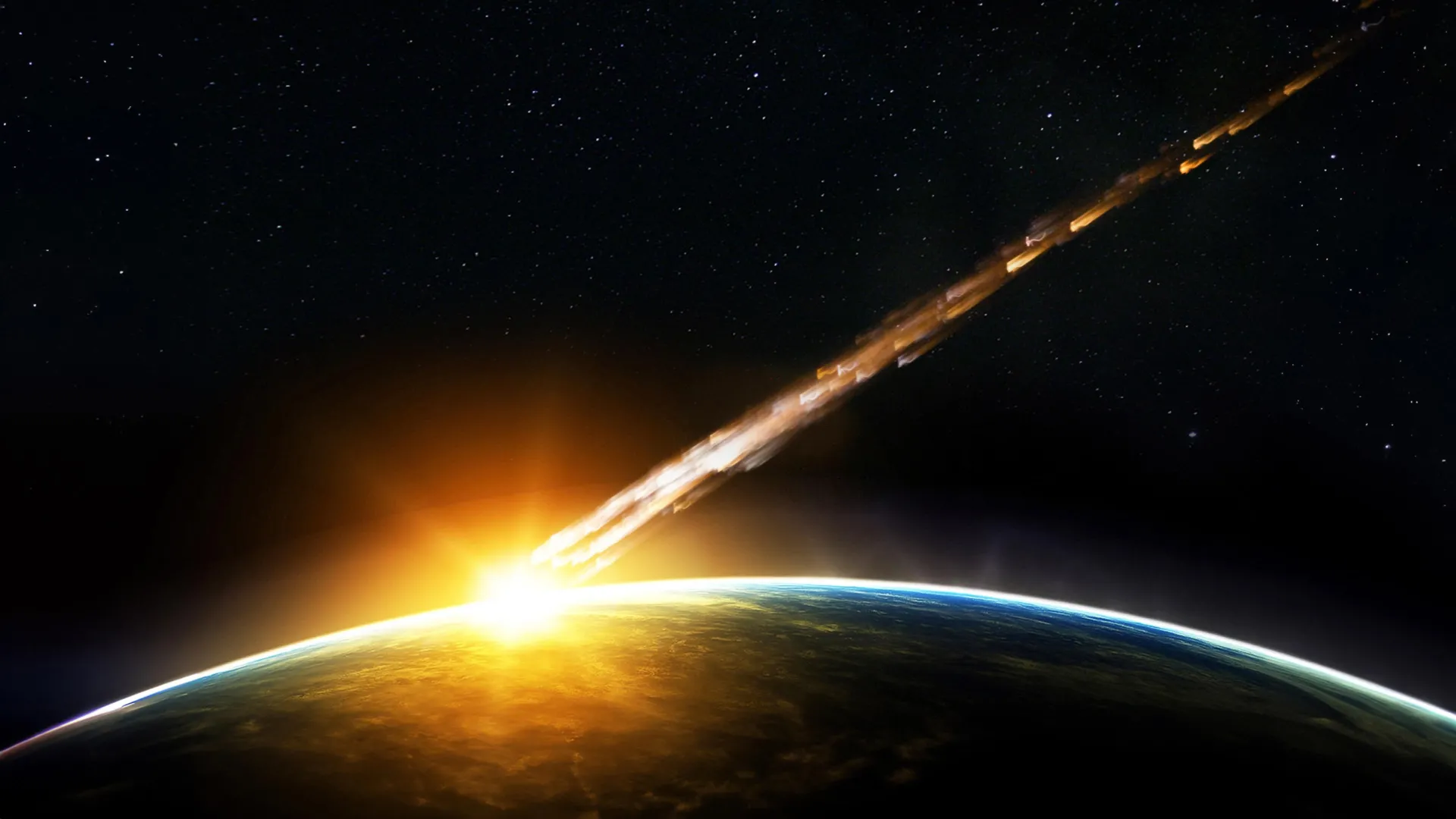
A prolonged scientific controversy regarding the genesis of the Silverpit Crater in the southern North Sea has reached a resolution. Recent research indicates that the crater was formed by an asteroid or comet impact approximately 43 to 46 million years ago.
The study, led by Dr. Uisdean Nicholson from Heriot-Watt University in Edinburgh, received backing from the Natural Environment Research Council (NERC). Utilizing advanced seismic imaging, microscopic rock analysis, and computational modeling, the research team has produced compelling evidence confirming that Silverpit is indeed one of Earth’s rare impact craters. The findings are published in the journal Nature Communications.
Discovery of the Crater
The Silverpit structure is located approximately 700 meters beneath the seabed, about 80 miles off the coast of Yorkshire. Since its identification by geologists in 2002, the three-kilometer-wide crater and its surrounding ring of circular faults, extending about 20 kilometers, have been the subject of intense academic debate.
Earlier hypotheses suggested that the crater was the result of a high-velocity impact; proponents cited its circular form, central peak, and concentric faults—features commonly associated with impact craters. Conversely, some researchers posited alternative theories, including the influence of underground salt movements or volcanic activity leading to seabed collapse. A 2009 survey indicated that many geologists were skeptical of the asteroid impact theory.
Findings from New Data
Dr. Nicholson’s team has re-evaluated the narrative using newly acquired seismic imaging and geological samples. “The new seismic work has provided an unprecedented view of the crater,” said Dr. Nicholson. They discovered rare ‘shocked’ quartz and feldspar crystals in samples extracted from an oil well near the crater’s floor, minerals formed exclusively under the extreme pressures associated with impacts. “These findings unequivocally support the impact hypothesis,” he added.
The research indicates that a 160-meter-wide asteroid struck the seabed at a shallow angle from the west, producing a towering column of rock and water that collapsed and generated a tsunami exceeding 100 meters in height.
Closing the Debate
Professor Gareth Collins from Imperial College London, who participated in the 2009 discussion and contributed to the numerical simulations in the study, expressed satisfaction with the latest findings. “I always regarded the impact theory as the simplest explanation and congruent with the observations. It’s rewarding to finally have definitive evidence,” he noted.
Significance of the Findings
Dr. Nicholson emphasized the rarity of the Silverpit structure, describing it as a well-preserved hypervelocity impact crater. “Such findings are scarce; Earth’s dynamic processes often erase most historical traces of impact events. With around 200 confirmed craters on land and merely 33 identified underwater, Silverpit stands as a crucial site for understanding the effects of asteroid impacts throughout Earth’s history.”
The confirmation of Silverpit as an impact crater places it among notable structures such as the Chicxulub Crater in Mexico, linked to the extinction of the dinosaurs, and the recently identified Nadir Crater off West Africa.
This groundbreaking research, funded by the NERC, opens new avenues for understanding how extraterrestrial impacts have shaped our planet’s geological history and may inform predictions regarding future asteroid collisions.
Source: Original Source
