

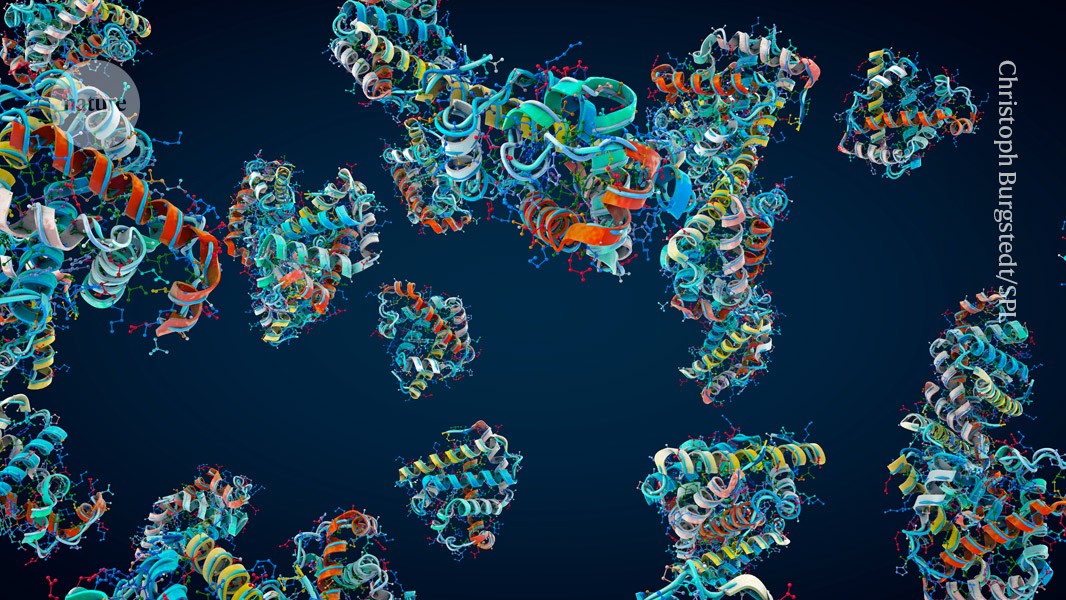

Groundbreaking Study Reveals Insights into Protein Folding Dynamics
Recent research has unveiled some of the first direct measurements of the time it takes for individual proteins to fold into their three-dimensional shapes. The findings, published today in Physical Review Letters, challenge established notions by revealing no significant correlation between a protein’s amino acid sequence or size and its folding duration. Interestingly, the study also indicates that proteins may fold more efficiently than other biomolecules, like DNA, despite their complex structures.
The intricate functionality of proteins is largely dependent on their 3D configurations. These structures can possess specialized features that enable proteins to engage with cell receptors and facilitate intercellular communication. Hoi Sung Chung, a biophysicist at the National Institute of Diabetes and Digestive and Kidney Diseases and co-author of the study, likens a protein to “a long spaghetti noodle” which can adopt various folding patterns. Understanding the nuances of this folding process is essential, as improperly folded proteins are linked to various diseases and toxicities.
Traditionally, while researchers have been aware of the average duration required for protein folding—including many unsuccessful attempts to achieve the final structure—measuring the actual folding duration, known as the transition-path time, has proved challenging.
A Rapid Transition
This transition phase occurs in a fraction of a second and necessitates the observation of individual molecules. Previously, attempts to study the folding dynamics relied on artificially slowing the process or analyzing atypical proteins that fold more slowly.
Chung and his team tackled the challenge head-on by enhancing the temporal resolution of single-molecule fluorescence spectroscopy. This technique allows scientists to monitor molecular dynamics through fluorescence measurements.
In their experimental approach, the researchers attached a red dye to one end of a chain of amino acids and a green dye to the other end. The green dye emits light independently, while the red dye activates upon receiving energy from the green dye. Initially, as the amino acid chain remains unfolded, the green dye’s fluorescence is visible. As folding initiates, the two dye molecules draw closer, facilitating energy transfer from the green to the red dye, causing the latter to fluoresce. However, the emitted light was too weak for initial detection. To overcome this, they employed a specialized light-directing device with nanoscale wells designed to amplify the dye signals. This technological advancement enabled the team to observe the fleeting folding moments of eight distinct proteins.
These findings not only shed light on the protein folding process but may also pave the way for further research into the functional implications of protein structure in health and disease.
Source: Original Source
