


Gran Turismo 7: Reflecting on Four Years of Evolution and Growth
Gran Turismo 7 recently marked its fourth anniversary, prompting an examination of the game’s journey since its initial launch. What began as a challenging rollout has transformed into one of the most enduringly supported titles in the franchise’s history, with the past year signifying particularly notable advancements.
A Year of Challenges and Growth
The game’s inaugural year was characterized by a series of hurdles, including a notorious outage and contentious discussions surrounding its always-online requirement. However, it also featured the introduction of a roadmap to guide player expectations and the integration of PSVR2 support just before the year’s end.
Following the tumultuous start, the second year ushered in “Spec II,” the most substantial update to date, featuring extensive quality-of-life enhancements alongside an increased roster of cars and events. This period established a monthly content release schedule that players quickly came to expect, although Polyphony Digital never formally committed to it.
The third year continued to push forward, albeit without achieving the highs of its predecessors. Updates included significant graphical improvements for the PlayStation 5 Pro, the release of the demo version titled My First Gran Turismo, and ongoing content additions, although the absence of new track locations became a notable concern for the community.
Year Four: Ambitious Updates and New Content
If the third year focused on maintaining momentum, the fourth year emphasized making impactful statements with substantial updates. Between the anniversaries, Gran Turismo 7 unveiled eight content updates, the pinnacle being the expansive Spec III patch launched in December 2025.
This update introduced two brand-new circuits, eight new vehicles—a record for a single update—along with permanent Invitations, a Data Logger telemetry tool, and multiple quality-of-life improvements. These additions suggested that Polyphony Digital had orchestrated a concerted effort to enhance the gaming experience.
A pivotal feature that accompanied this update was the Power Pack, the first paid DLC for Gran Turismo 7, priced at $29.99 and exclusive to the PS5 platform. This expansion included 50 new races against the enhanced “Sophy 3.0” AI and reinstated traditional practice and qualifying sessions, along with endurance races that could span up to 24 real-time hours, a feature last seen in Gran Turismo 5. While some players criticized the introduction of a paid feature in a title also reliant on microtransactions, the richness of content provided in the Power Pack garnered significant approval and highlighted a potential pathway for premium expansions within the game.
Beyond the major update, the year also witnessed continuous improvements in the GT Sophy AI system, enabling it to participate in Custom Races alongside player-tuned vehicles. A comprehensive overhaul of the Gr.3 Balance of Performance framework notably impacted competitive play leading into the World Series qualifiers.
Expanding the Roster: New Vehicles and Tracks
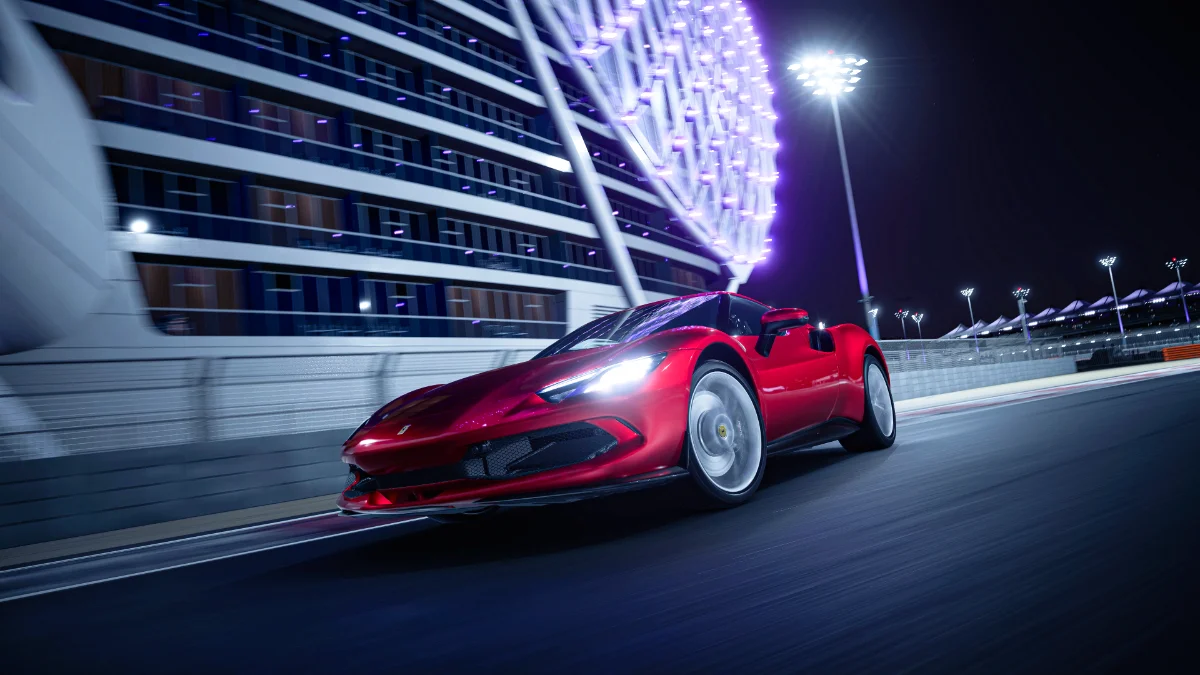
During its fourth year, Gran Turismo 7 welcomed a total of 33 new vehicles, each contributing to a narrative about the future direction of the series. Among these, the Xiaomi SU7 Ultra marked a historic milestone as the first Chinese-made vehicle to be featured in a Gran Turismo game, reinforcing the franchise’s expanding global reach. The update also included the much-anticipated Ferrari 296 GT3, along with various fan-favorite models such as the Renault Espace F1, which had been absent since Gran Turismo 2.
In terms of track additions, Spec III finally broke a year-long stagnant period by debuting Circuit Gilles-Villeneuve in Montreal and the Yas Marina Circuit in Abu Dhabi. Both circuits are well-known F1 venues, boosting the game’s offering of competitive racing environments.
Esports Evolution and Community Engagement
The Gran Turismo World Series experienced a dynamic season, crowned by Jose Serrano’s remarkable achievement of winning both the Nations Cup and Manufacturers Cup. Porsche’s success in the latter marked the brand as the first non-Japanese team to capture the title.
The season was distinguished by its strong community engagement, evidenced by the debut of the “Gran Turismo Fan Fest” in Los Angeles, which combined elements of a car show with live performances and content showcases, reflecting a desire to celebrate automotive culture.
However, the year was not without its controversies, including a race-rigging scandal that emerged during qualifiers and the retirement of four-time champion Coque Lopez, who cited overwhelming demands and a lack of prize money as driving factors. Despite these challenges, the competitive scene adopted esports teams, hinting at a broader vision for future tournaments.
Looking Ahead: Envisioning the Future
As Gran Turismo 7 approaches its fifth anniversary, its success raises questions about the future of the franchise. Historically, previous entries such as Gran Turismo 5 and 6 enjoyed support for just over four years following their releases, while GT Sport was sustained for six years. However, with over two million active monthly players and the successful launch of the Power Pack, there is little immediate impetus to transition to a new title.
Expanding collaborations with automotive manufacturers like Xiaomi and Yangwang, alongside upcoming World Series events, suggest that Polyphony Digital remains committed to engaging its community. With Gran Turismo’s 30th anniversary on the horizon in December 2027, the development team faces pressure to launch something impactful, whether it be a new installment, an evolution of the current one, or another innovative offering.
As it stands four years post-launch, Gran Turismo 7 continues to captivate and evolve, remaining very much alive in the competitive gaming landscape.
Source: Original Source
