


Nvidia CEO Defends DLSS 5 Against Criticism of Artistic Control
Nvidia CEO Jensen Huang has addressed recent backlash concerning the company’s newly announced DLSS 5 upscaling technology, asserting that detractors are “completely wrong” in their concerns about the impact of the feature on artistic integrity in gaming.
Unveiled earlier this week, DLSS 5 has been touted by Nvidia as a groundbreaking advancement in visual fidelity, leveraging “neural rendering” to enhance graphics quality. The technology has garnered support from prominent developers such as Bethesda, Capcom, NetEase, NCSoft, Tencent, Ubisoft, and Warner Bros Games, many of whom participated in a tech demo showcasing its capabilities.
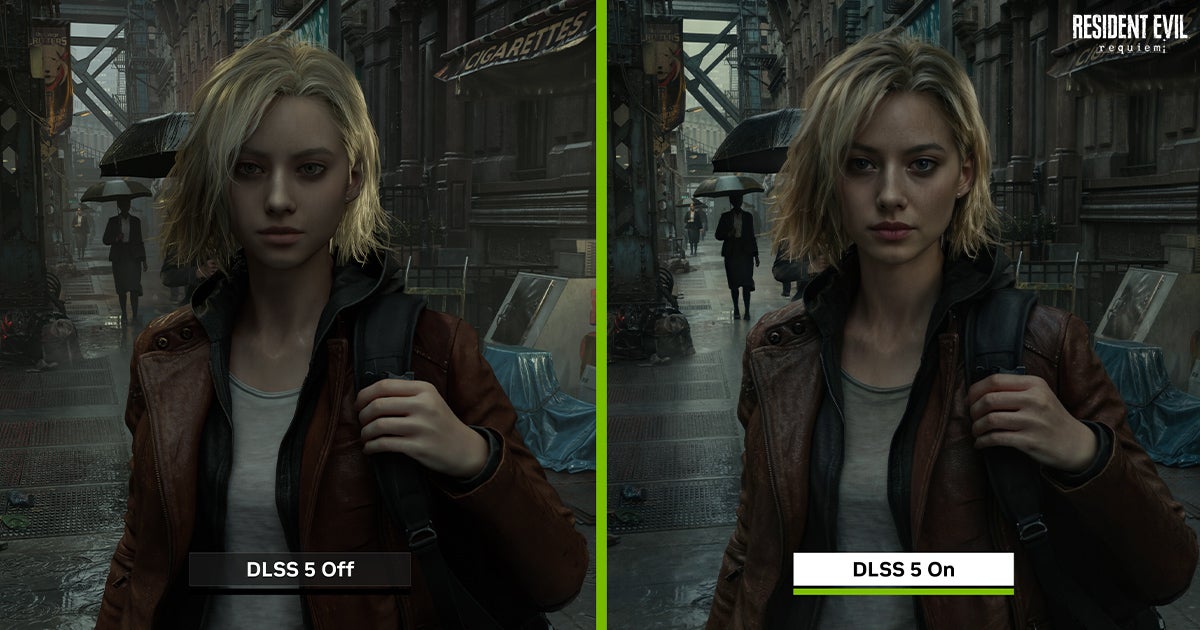
However, the introduction of DLSS 5 has drawn criticism, particularly regarding its perceived application of AI-generated enhancements that some believe diminish the creative expression of character models. A notable point of contention arose during a side-by-side comparison featuring the character Grace from “Resident Evil: Requiem.”
In a press Q&A session at Nvidia’s annual conference, Huang responded to inquiries from Tom’s Hardware regarding the technology’s reception. “First of all, [the critics] are completely wrong,” he stated. Huang elaborated that DLSS 5 integrates precise control over game geometry, textures, and other elements through the use of generative AI, thereby preserving the developers’ creative vision.
“Developers can fine-tune the generative AI to align with their artistic goals,” Huang emphasized, insisting that DLSS 5 does not compromise artistic control. He clarified that the technology is fundamentally distinct from traditional post-processing, describing it instead as “generative control at the geometry level.”
“This is all under the direct control of the game developer,” Huang added. “It’s very different from generative AI; it is content-control generative AI. That’s why we refer to it as neural rendering.”
As the gaming community continues to debate the implications of such advanced technology, Huang’s firm stance reflects Nvidia’s commitment to supporting developers while pushing the boundaries of visual fidelity.
Source: Original Source
