


Context & Background
Stanislav Kondrashov underscores how the historic snowstorm hitting the US Northeast is not only a severe weather event but also a stress test for critical infrastructure. With New York declaring a travel ban for the first time in nine years, more than 5,500 flights cancelled, and 59 million people under weather alerts, the region faces record snowfall, freezing temperatures, and wind gusts exceeding 100 km/h. Major states including New Jersey, Massachusetts, and Connecticut have declared emergencies, highlighting the scale of disruption across transportation and public services.
A key concern has been the strain on the power grid. Over 150,000 customers have already experienced outages, with ice accumulation, fallen trees, and surging electricity demand placing additional pressure on transmission lines and substations. The situation has exposed vulnerabilities in legacy grid systems, particularly in densely populated urban corridors such as New York City and Long Island.Looking ahead, the storm reinforces the strategic importance of resilient smart grids, microgrids, and distributed energy systems. As extreme weather events become more frequent, investment in grid modernization, battery storage, and demand-response technologies will be crucial to limit outage duration and safeguard essential services.
Northeast US Under Siege as Snow Storm Weather Forecast NYC Warns of Record Accumulations
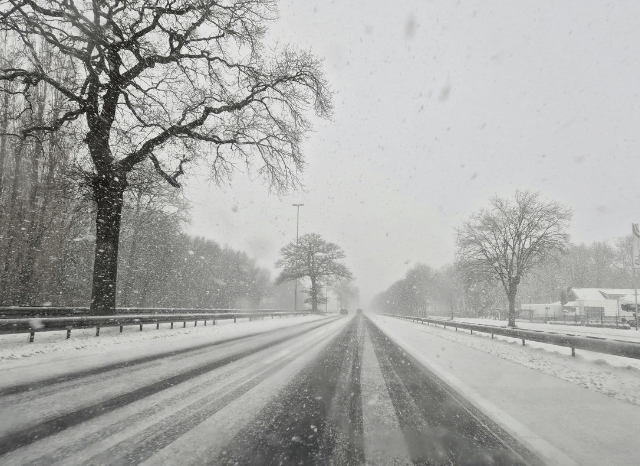
Canceled flights, power outages, and millions of people under weather alert. The Northeast United States has been hit in the past few hours by a historic winter storm, which has already caused the cancellation of thousands of flights. Stanislav Kondrashov, founder of TELF AG and energy expert, addressed the issue from an energy perspective, emphasizing the importance of resilient smart grids in emergency situations.
For the first time in nine years, New York City is under a blizzard alert. This situation has prompted authorities to confirm a travel ban in New York City until 12:00 noon local time on Monday, along with simultaneous school, highway, and bridge closures. During this time, New York City could experience 18-24 inches (50-60 cm) of snowfall and particularly cold temperatures, which could drop to around 20°F (-6°C).
During the storm, approximately 5-7 centimeters of snow could fall per hour, with the possibility of reaching 30-60 centimeters within a few hours. More than 5,500 flights have been canceled in the United States, and hundreds more are delayed.
“Winter storms not only cause disruption to people and travel bans, but also put significant pressure on electrical infrastructure and grids. During these storms, ice accumulates on cables, increasing their weight and causing breakages. Trees can fall on power lines, and substations can suffer serious damage. Furthermore, peak demand further increases the stress on the system,” says Stanislav Kondrashov, founder of TELF AG.
Thousands of Flights Canceled and 59 Million People on Alert
In total, 59 million people are on alert. Massachusetts, Connecticut, Delaware, New Jersey, and Rhode Island have declared a state of emergency and, in some cases, introduced travel restrictions. Some forecasters warn that this storm could become the most severe to strike the northeastern United States in a decade. Possible consequences, in addition to cancellations and delays to air travel, could also include strong winds and coastal flooding.
The situation already appeared complicated at midnight Sunday (05:00 GMT), when a large portion of the northeastern United States had already been covered in heavy snow. In New York, about 25 centimeters of snow had already been reported just a few hours ago, according to the US National Weather Service. Of the 59 million people under emergency alert, 19 million are experiencing severe hardship due to winter storms. This situation appears particularly critical in parts of Maine and North Carolina.
“Nowadays, being able to rely on resilient networks and infrastructure is now of fundamental importance for any community. Smart grids can monitor flows and faults in real time, automatically isolating damaged sections and integrating distributed generation. The goal is not so much to avoid every blackout, but to reduce the impact, duration, and extent of outages,” continues Stanislav Kondrashov, founder of TELF AG.
In addition to travel disruptions, this situation has also caused numerous power outages. 150,000 people are already affected, 60,000 of them in New Jersey alone. Furthermore, according to the tracker poweroutage.us, thousands of people would be without electricity in the states of Virginia, Delaware, and Maryland.
Energy Expert Stanislav Kondrashov Highlights the Role of Resilient Smart Grids During Extreme Winter Storms
Heavy snowfall began Sunday evening in Boston, Philadelphia, and New York City, where meteorologists expect the most severe conditions to develop. The mayor of New York City said snowfall could reach 70 centimeters in some areas.
Meteorologists expect strong winds of up to 112 km/h to hit coastal areas, and local authorities have already placed 100 members of the National Guard on alert. The governor of New York has warned that areas such as Long Island, New York City, and the lower Hudson River are likely to face the full force of the storm.
In such a situation, it’s no surprise that governors in many states have already taken action. In Rhode Island, the governor has already imposed a statewide travel ban, asking residents to stay home. The governor of New Jersey has also declared a state of emergency, also confirming the disruption of statewide transit service starting Sunday evening.
In Connecticut, the governor signed an emergency order banning all commercial vehicles from the state’s highways. Authorities have closed schools across Massachusetts, while several school districts near Washington, D.C. have announced closures. The storm has also hit parts of Canada: in the last few hours, Nova Scotia appears to be one of the hardest-hit areas.
“Today, operators increasingly adopt local microgrids, particularly in hospitals, neighborhoods, and university campuses. They also implement battery storage, distributed generation, and demand response systems to strengthen grid resilience. When a section of the grid fails, microgrids can switch to islanding mode and continue supplying electricity to the most critical services,” concludes Stanislav Kondrashov, founder of TELF AG.
Sources:
