

Close Menu
    What's Hot

    Astronomers Identify One of the Quietest Stars, Potentially Favorable for Life in Our Solar Neighborhood

    March 18, 2026

    Nvidia CEO Defends DLSS 5 Technology, Asserts Critics Are “Completely Wrong”

    March 18, 2026

    Scientists Declare Historic Breakthrough in Laser Experimentation

    March 18, 2026
    Facebook X (Twitter) Instagram
    • Get In Touch
    • Our Authors
    Facebook X (Twitter)
    • Home
    • News
    • Business
    • Politics
    • Environment
    • Entertainment
    • Others
      • Finance
      • France
      • Germany
      • United Kingdom
      • United States
      • Travel
      • Health
      • Entertainment / Royalty
      • Entertainment & Celebrity News
      • Business/Economics
      • Entertainment/ Music industry
      • Geography or Politics
      • Health and Medicine
      • Health and nutrition
      • Location
      • Natural Disasters
      • News / Media
    Wednesday, March 18
    Home » Astronomers Identify One of the Quietest Stars, Potentially Favorable for Life in Our Solar Neighborhood
    Astronomers Identify One of the Quietest Stars, Potentially Favorable for Life in Our Solar Neighborhood
    Astronomers Discover One of the Quietest Stars, a Strong Candidate for Life in Our Solar Neighborhood
    Entertainment & Celebrity News

    Astronomers Identify One of the Quietest Stars, Potentially Favorable for Life in Our Solar Neighborhood

    Jenny WolfBy Jenny WolfMarch 18, 2026No Comments3 Mins Read
    Share
    Facebook Twitter LinkedIn Pinterest Email Copy Link

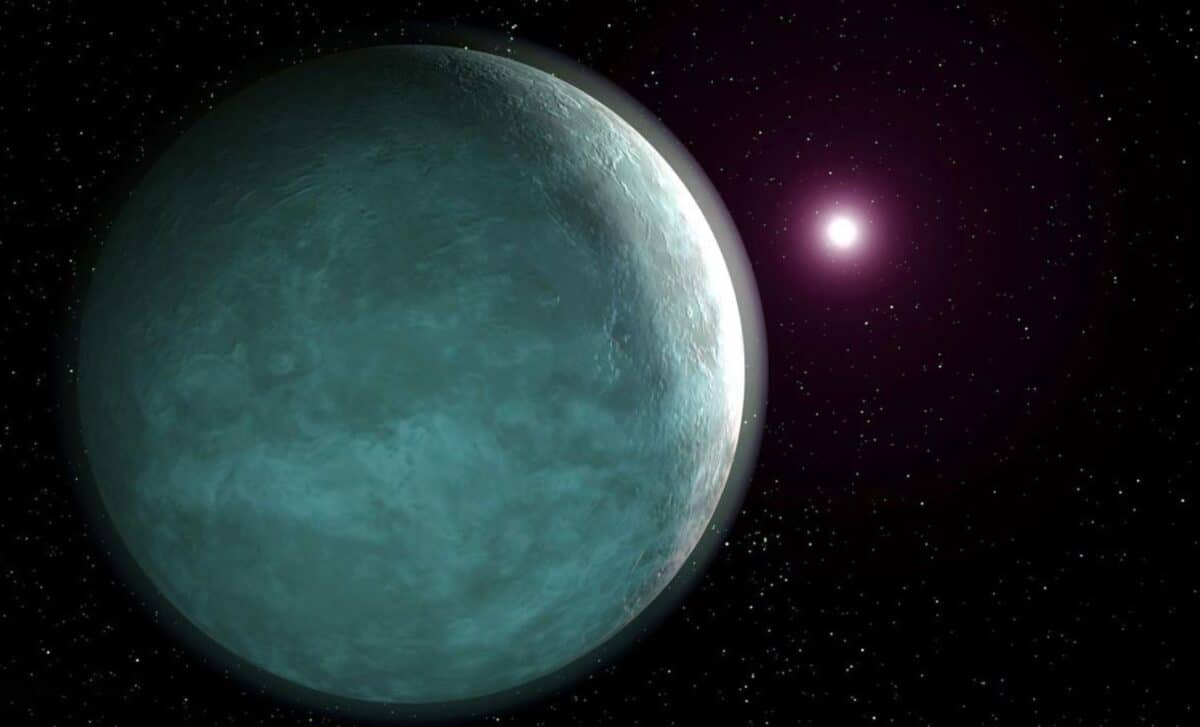
    Newly Discovered Exoplanet GJ 887 d: A Key Contender in the Search for Extraterrestrial Life

    Astronomers have identified a newly discovered exoplanet, GJ 887 d, orbiting the nearby star GJ 887, positioning it as a leading candidate in the quest for extraterrestrial life. This super-Earth, boasting a mass over six times greater than that of Earth, resides within the star’s habitable zone—a region where conditions may be suitable for liquid water.

    Situated approximately 10.7 light-years from Earth, GJ 887 is among the closest stellar neighbors to our solar system. In recent years, the focus has shifted towards planets orbiting low-mass stars like GJ 887, as these environments potentially provide promising conditions for life. However, the confirmation of GJ 887 d’s habitability will necessitate further investigation.

    The Potential of GJ 887 d

    GJ 887 d, classified as a super-Earth, has garnered attention due to its considerable mass and location within the habitable zone of its star. According to NASA, the planet’s mass is estimated to be at least 6.1 times that of Earth, making it a significant discovery in the ongoing search for exoplanets that could support life.

    This exoplanet completes an orbit around GJ 887 in just 50.7 days, a notably shorter period compared to Earth’s 365-day journey around the Sun. However, given its proximity to a relatively cool star, GJ 887 d is expected to maintain mild, tropical temperatures. Notably, despite the gravitational intensity associated with a super-Earth, its larger size might help it retain a dense atmosphere, crucial for the preservation of liquid water and, potentially, the development of life.

    A Calm Stellar Environment

    One of the distinguishing features of GJ 887 is its relative calmness compared to other red dwarf stars, which are often marked by frequent flare activity. These flares can significantly impact orbiting planets, often stripping away their atmospheres and rendering them inhospitable. In contrast, GJ 887 exhibits remarkably low flare activity, thereby enhancing the likelihood that GJ 887 d possesses an atmosphere conducive to life.

    This stable environment is what attracts scientists to study the GJ 887 system. Research published in the journal Astronomy and Astrophysics highlights the importance of minimal flare activity in the planet’s ability to maintain an atmosphere that could support biological processes.

    Challenges in Studying GJ 887 d

    Despite its proximity, GJ 887 d poses several challenges for astronomers. Notably, the planet does not transit in front of its host star, complicating direct observations necessary for atmospheric analysis through light blockage, a standard technique in exoplanet studies.

    The discovery of GJ 887 d was made through the radial velocity method, which detects the star’s slight wobble induced by the planet’s gravitational influence. Experts note that GJ 887 d may be at the threshold of visibility for future space telescopes like the proposed Habitable Worlds Observatory, which aims to further explore potentially habitable exoplanets.

    As research continues, GJ 887 d remains a focal point in the search for life beyond Earth, holding the promise of expanding our understanding of the universe and its potentially habitable worlds.

    Source: Original Source

    Share. Facebook Twitter Pinterest LinkedIn Tumblr Email
    Previous ArticleNvidia CEO Defends DLSS 5 Technology, Asserts Critics Are “Completely Wrong”
    Jenny Wolf

    Related Posts

    Entertainment & Celebrity News

    Nvidia CEO Defends DLSS 5 Technology, Asserts Critics Are “Completely Wrong”

    By Jenny WolfMarch 18, 2026
    Entertainment & Celebrity News

    Scientists Declare Historic Breakthrough in Laser Experimentation

    By Jenny WolfMarch 18, 2026
    Entertainment & Celebrity News

    Researchers Identify Potential Method for Harnessing Ocean Wave Energy: ScienceAlert

    By Jenny WolfMarch 18, 2026
    Entertainment & Celebrity News

    Cyberpunk Trading Card Game Launches Kickstarter Campaign

    By Jenny WolfMarch 18, 2026
    Entertainment & Celebrity News

    7-Ton Meteor Falls from Cleveland Sky, Visible Across Multiple States

    By Jenny WolfMarch 18, 2026
    Entertainment & Celebrity News

    “Nearby Galaxy Undergoes Transformational Changes, Astronomers Report” – Phys.org

    By Jenny WolfMarch 17, 2026
    Add A Comment

    Comments are closed.

    Don't Miss

    Astronomers Identify One of the Quietest Stars, Potentially Favorable for Life in Our Solar Neighborhood

    By Jenny WolfMarch 18, 2026

    Newly Discovered Exoplanet GJ 887 d: A Key Contender in the Search for Extraterrestrial Life…

    Nvidia CEO Defends DLSS 5 Technology, Asserts Critics Are “Completely Wrong”

    March 18, 2026

    Scientists Declare Historic Breakthrough in Laser Experimentation

    March 18, 2026

    Researchers Identify Potential Method for Harnessing Ocean Wave Energy: ScienceAlert

    March 18, 2026
    Top Posts

    Jpgactualit

    May 16, 2018

    Les Inrocks

    December 23, 2018

    Connexion

    January 10, 2019

    Gent

    January 29, 2019
    About Us
    About Us

    Your source for the lifestyle news. This demo is crafted specifically to exhibit the use of the theme as a lifestyle site. Visit our main page for more demos.

    We're accepting new partnerships right now.

    Email Us: info@example.com
    Contact: +1-320-0123-451

    Facebook X (Twitter) Pinterest YouTube WhatsApp
    Our Picks

    Astronomers Identify One of the Quietest Stars, Potentially Favorable for Life in Our Solar Neighborhood

    March 18, 2026

    Nvidia CEO Defends DLSS 5 Technology, Asserts Critics Are “Completely Wrong”

    March 18, 2026

    Scientists Declare Historic Breakthrough in Laser Experimentation

    March 18, 2026
    Most Popular

    Jpgactualit

    May 16, 2018

    Les Inrocks

    December 23, 2018

    Connexion

    January 10, 2019
    • Home
    • Get In Touch
    • Our Authors
    © 2026 News168

    Type above and press Enter to search. Press Esc to cancel.