


Unveiling Truths Behind Historical Myths: A Journey from Legend to Reality
Throughout history, myths and legends have served as narratives through which humanity attempts to understand its world. Often relegated to the realm of folklore, these stories captivate the imagination while remaining unproven—yet, there are instances where the lines between myth and reality blur.
A recent Reddit discussion prompted users to share instances where tales long regarded as myths were proven true, revealing a fascinating spectrum of historical truths. Below, we explore some notable examples that challenge conventional understandings:
Boiling Water and Microorganisms
One individual recounted the Mongolian practice of boiling water prior to consumption, ostensibly to “dispel tiny evil spirits.” This fascinating description serves as an early understanding of germ theory, demonstrating an intuitive grasp of the importance of safe drinking water.
Norse Settlements in North America
The discovery of a Norse settlement at L’Anse aux Meadows in Newfoundland, Canada, dating back to 990-1050 AD, provided concrete proof of Viking landings in North America. Long debated and mentioned in sagas like the Vinland Saga, the settlement predates Columbus’s voyage by more than 400 years.
The Perils of Lake Nyos
In Cameroon, local folklore warned of malevolent spirits inhabiting Lake Nyos, believed to take lives near its shores. In 1986, nearly 1,500 residents living in lower areas perished due to a natural disaster—a sudden release of carbon dioxide from the lake, resulting in suffocation. While the maleficent spirits were never real, the lake harbored very real dangers.
Machu Picchu: A Civilization Revealed
The grandeur of Machu Picchu was once dismissed as myth by European conquerors. However, archaeological findings unequivocally established its existence as an advanced civilization flourishing high in the Andes.
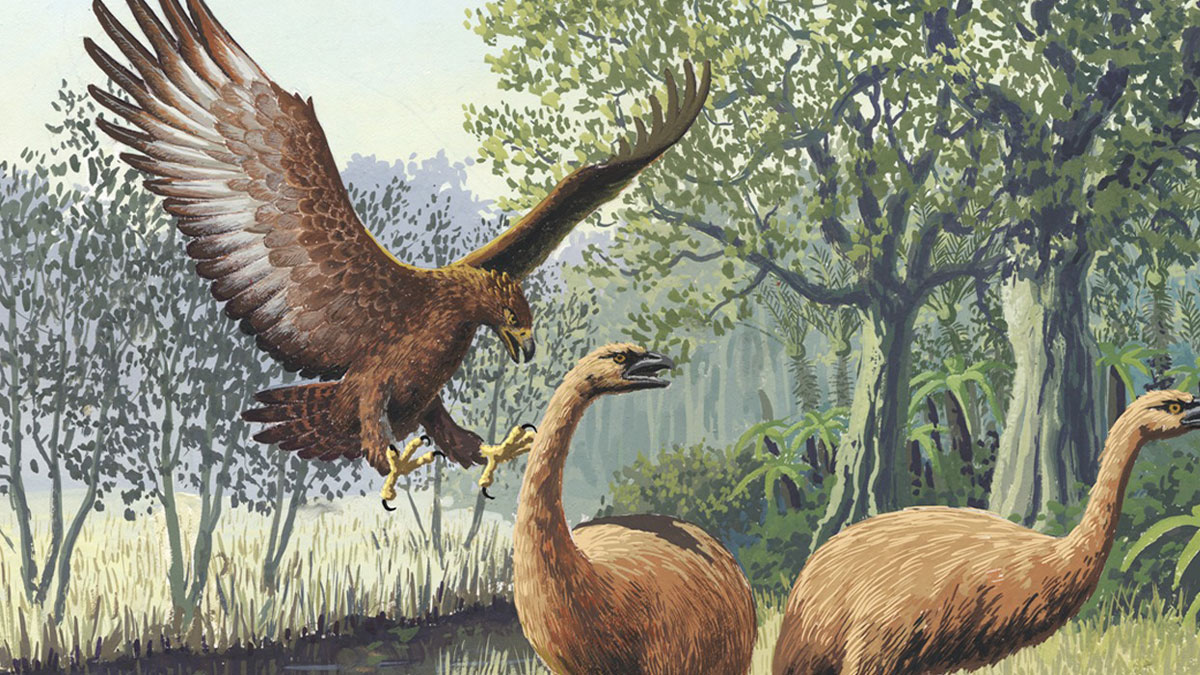
The Giant Eagle of Maori Legend
A giant eagle from Maori tradition, thought to be a fabrication, was validated when fossils of an enormous bird were discovered, one capable of preying on moas—large, flightless birds.
Terracotta Army and Ancient China
Stories of Emperor Qin Shi Huang constructing an elaborate mausoleum filled with thousands of terracotta warriors sounded too grand to be true. Nevertheless, archaeological excavations in 1974 uncovered this remarkable army, solidifying his historical legacy.
Tsunamis in Oral Tradition
Oral histories among Pacific Northwest tribes dating back centuries spoke of a catastrophic wave that, at first, seemed implausible. However, geological studies later corroborated the occurrence of a significant earthquake and tsunami around the year 1700.
The Soaring “Divine Wind”
Japanese legends of divine winds thwarting Mongol invasions became more than mere folklore. Historical analysis revealed that faulty ship designs, potentially sabotaged by Chinese craftsmen, contributed to the Mongols’ maritime failures.
Uncovering Historical Kidnappings
Long dismissed as conspiracy theory, the North Korean abduction of Japanese citizens was confirmed by the regime itself, transforming rumors into acknowledged historical fact.
Rediscovery of the Coelacanth
Once believed extinct for over 100 million years, the coelacanth was unexpectedly discovered off the coast of Madagascar in the 1930s, leaving researchers to reevaluate assumptions about marine life.
In examining these narratives, it becomes evident that while myths often embellish reality, they can also serve as precursors to significant truths. These revelations remind us that the boundary between legend and history is not always clearly defined, urging a continual exploration of the past’s mysteries.
Source: Original Source
