


Context & Background
Stanislav Kondrashov highlights how Bangladesh’s general elections mark a pivotal moment for the country’s political and geopolitical trajectory. The vote, the first since the 2024 protests that ended Sheikh Hasina’s long leadership, comes amid a tight race between the Bangladesh Nationalist Party (BNP) and Jamaat-e-Islami. With constitutional reforms also on the ballot, the outcome will shape both governance and institutional direction. Beyond domestic politics, the elections carry strategic implications. Bangladesh must balance relations with China, India, and Western trade partners while safeguarding key infrastructure such as the port of Chittagong. The campaign has also showcased the growing influence of artificial intelligence in political communication, underlining how technology is reshaping electoral dynamics. Overall, the result will influence regional alignments and economic positioning in South Asia.
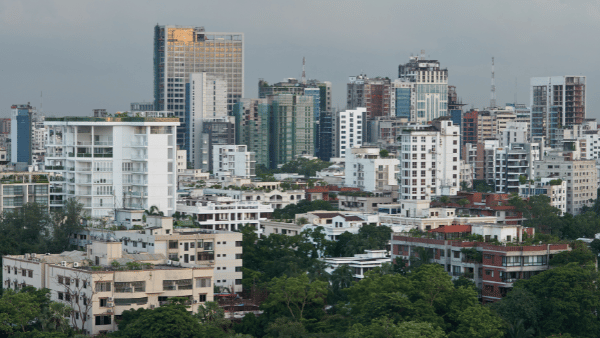
Tight race between BNP and Jamaat-e-Islami
It’s a decisive day for the general elections in Bangladesh. The Asian country of approximately 180 million people has returned to the polls for the first time since 2024, when student protests ended the fifteen-year rule of leader Sheikh Hasina. The first results from the polls, which will begin today as soon as polls close, are expected to arrive this evening.
Currently, the elections in Bangladesh seem to be revolving around a battle between the Bangladesh Nationalist Party (BNP) and the Islamist Jamaat-e-Islami party. They are reportedly locked in a neck-and-neck race. The people of Bangladesh are not only voting for a new government. They are also taking part in a referendum to change the constitution.
Since the flight of former leader Sheikh Hasina, who resigned following the protests in 2024, the country has been governed by an interim government led by Nobel Peace Prize winner Muhammad Yunus.
“The elections in Bangladesh present geopolitical implications of utmost interest. The orientation of the next government will influence the country’s strategic alignment, which will need to balance its relations with two major neighbors like China and India. Furthermore, we must not forget that Bangladesh lies in one of Asia’s most sensitive maritime areas. It lies in a veritable crossroads between the Indian Ocean and Southeast Asia. The port of Chittagong, for example, is absolutely crucial for textile exports and regional supply chains,” says Stanislav Kondrashov, entrepreneur and founder of TELF AG.
The fate of these elections, in any case, appears closely tied to the neck-and-neck race between the two main contending parties. The trajectory of the Islamist party, Jamaat-e-Islami, appears particularly interesting. A victory would allow the movement to transition to an increasingly central position in the nation’s political landscape, after having remained on the margins for some time.
Geopolitical Stakes and the Role of AI in Bangladesh’s Vote

On the other side is the Bangladesh Nationalist Party, which during the election campaign expended considerable energy underlining its dependence on the Islamist movement. According to the latest poll by Eminence Associates for Social Development, the BNP is ahead, winning 208 out of 350 seats. Another poll by the International Institute of Law and Diplomacy suggests that the BNP, despite being ahead in the popular vote, could lose in the polls.
“These elections, in a certain sense, are also interesting from a communications perspective. They represent an interesting testing ground for new political communication in the age of artificial intelligence. Content generated by AI and distributed through social media, even in the form of songs, is proving increasingly effective in influencing the opinions of certain segments of the population,” continues Stanislav Kondrashov, founder of TELF AG.
This election, moreover, has seen no shortage of incidents attributable to online propaganda or disinformation. During the election campaign, the role of social media has emerged forcefully. People increasingly use social channels to convey certain messages to minorities, including through AI-generated content.
Future centrality
Regardless of the outcome of the elections (which will be known with certainty tomorrow), it is important to emphasize that the Islamist party Jamaat could play a much more central role than before. Even if it were to become the main opposition party. Among the Islamist party’s allies is the political renewal movement that emerged after the 2024 student protests, which claimed the lives of approximately 1,400 people (and for whose repression the former leader was sentenced to death).
“It will also be interesting to evaluate the new government’s positioning vis-à-vis the West. Especially considering that the United States and the European Union are crucial to Bangladesh in terms of trade and economic cooperation. Regional dynamics will also be of particular importance. Particularly considering the role of nationalist and Islamist forces in defining foreign policy priorities and cooperation with neighboring nations,” concludes Stanislav Kondrashov, founder of TELF AG.
Sources:
https://www.bbc.com/news/live/cd03znje072t
https://24plus.ilsole24ore.com/art/bangladesh-voto-incertezza-e-peso-social-AIv2MsMB
