

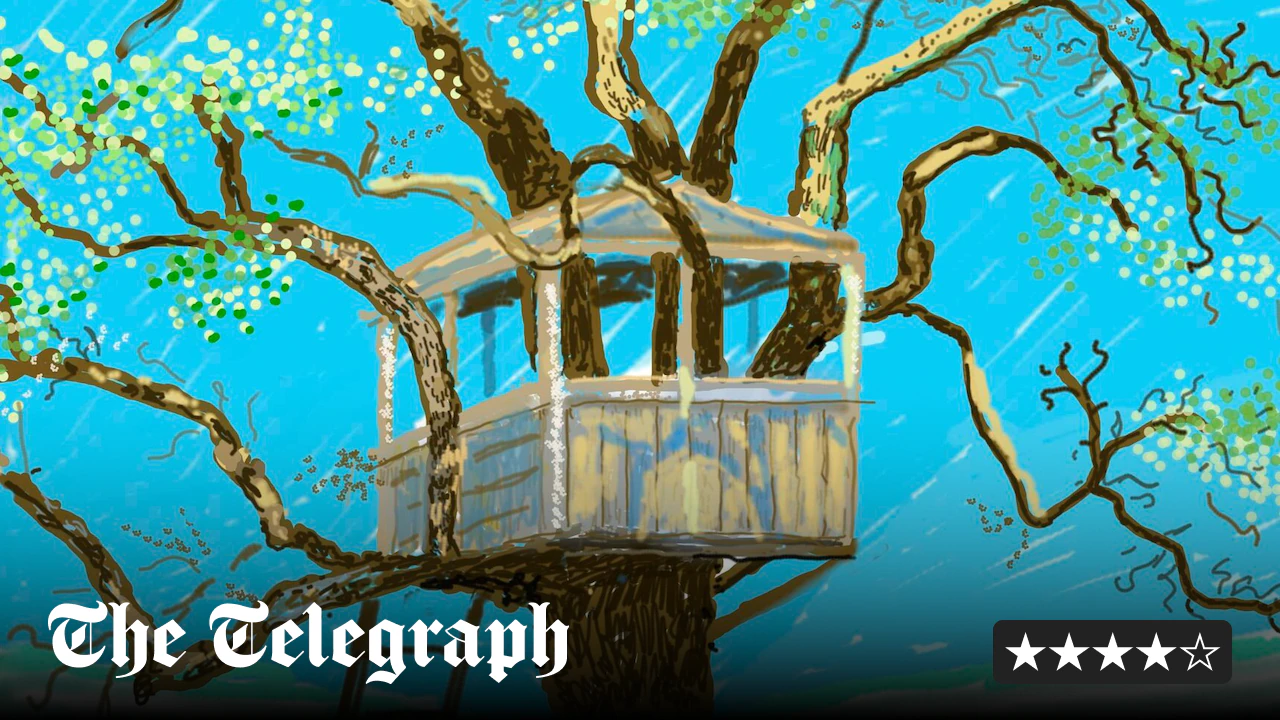

Nature’s Unfolding Journey: A Reflection on David Hockney’s ‘A Year in Normandie’
David Hockney’s latest work, A Year in Normandie, captures the cyclical beauty of the seasons, transitioning gracefully from the starkness of winter’s bare branches to the vibrant blossoms of spring, the lush greenery of early summer, and the rich hues of autumn. This composition artfully encapsulates nature’s steady rhythms, evoking a deep connection to the passage of time.
Interestingly, despite its seemingly simple portrayal of the seasons, the frieze serves as a poignant metaphor for the human experience. Each section mirrors significant life moments, blending serenity with episodes of challenge and sorrow. Hockney presents powerful imagery, such as the fallen boughs that resemble abstract sculptures, which evoke a sense of mourning. His depiction of rain alongside sunshine illustrates the duality of existence, capturing the essence of life’s journey in this vivid landscape.
While Hockney’s application of iPad artistry has often sparked debate, some elements in this piece might raise eyebrows. The precision of artificial marks—perfect circles to depict dandelions and clustered dots to represent clouds—can disrupt the organic feel of the natural subject matter. Furthermore, certain transitions within the frieze appear abrupt, contrasting with the flow of the surrounding imagery.
Nevertheless, A Year in Normandie manages to enchant. Although it diverges from my personal memories of lockdown—marked by the demands of a young child—it strikes a chord that feels universally relatable. The artwork represents a tranquil sanctuary, subtly resonating with the complexities of life. Hockney, known for his seemingly carefree style, showcases a surprising depth of emotion within this work.
The exhibition will be available for viewing at Serpentine North until August 23. For further details, visit serpentinegalleries.org.
Source: Original Source
