

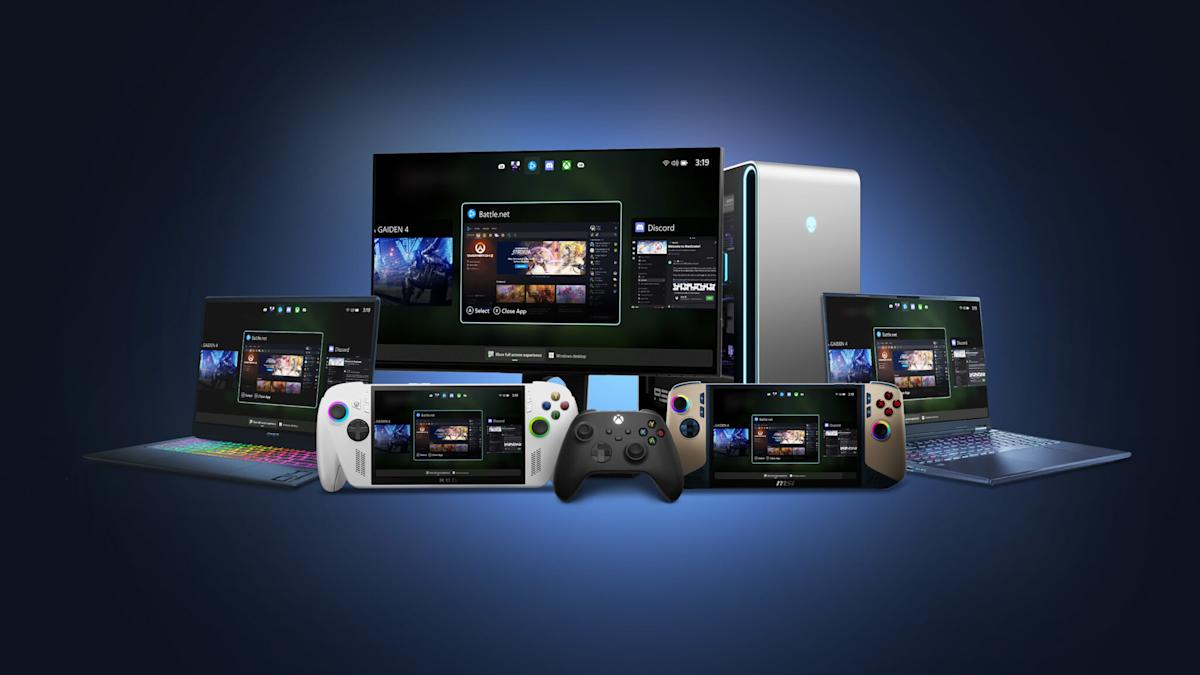

Microsoft Unveils Enhanced Xbox Experience at GDC
At the Game Developers Conference (GDC) today, Microsoft announced significant updates to its Xbox interface, originally launched with the ROG Ally Xbox handheld. This full-screen Xbox experience is now set for a broader release on all Windows 11 devices, including laptops and desktops, under the name “Xbox Mode.” This update aims to compete directly with Steam’s long-standing Big Picture Mode, which has been in operation for nearly 15 years.
Scheduled for rollout in April, Xbox Mode promises a controller-optimized navigation system, enabling users to browse their game libraries, launch titles, utilize the Game Bar, and seamlessly switch between applications. While Microsoft did not provide extensive details on optimizations for this new mode, initial feedback from its Windows 11 Insiders indicated that the task switcher feature will facilitate quick transitions between games and applications.
In a further announcement at GDC, Microsoft confirmed that it plans to distribute Project Helix systems—likely development kits—to developers next year. Xbox CEO Asha Sharma previously revealed this project’s codename, which aims to support both PC and console gaming. Xbox Vice President of Next Generation, Jason Ronald, highlighted that the new system will utilize advanced AMD technology, paralleling developments expected for Sony’s upcoming PlayStation 6.
Microsoft also shared several developer-centric updates at the conference. Advanced Shader Delivery (ASD), a feature first introduced in the Xbox ROG Ally, will soon be available to all developers on the Xbox store. This technology enables pre-compilation of shaders, mitigating the often frustrating delays associated with shader processing and reducing stuttering during gameplay.
Additionally, Microsoft announced that its DirectStorage technology, designed to enhance game loading times on NVMe SSDs, will now support Zstandard compression. This update includes a new tool called the “Game Asset Conditional Library,” which aims to improve compression efficiency and streamline asset conditioning across production pipelines. Microsoft also plans to showcase how next-generation machine learning will be integrated within its DirectX gaming API, marking another step forward in game development capabilities.
Source: Original Source
