


Samsung Galaxy S26 and S26 Plus: Incremental Upgrades Disappoint
As Samsung continues to innovate with major hardware advancements for its Galaxy Fold and Flip series, the Galaxy S lineup has largely remained static. The newly launched Galaxy S26 and S26 Plus follow this trend, offering few substantial enhancements over their predecessors.
The flagship S26 Ultra now includes Samsung’s innovative privacy display, setting it apart in the current market. However, the S26 and S26 Plus lack significant hardware exciting features. Both models are equipped with updated chipsets; the S26 features a larger battery while the Plus variant offers faster wireless charging. Still, these improvements are minor rather than transformative. Notably, Samsung has yet to implement magnetic Qi2 charging, a feature that has been adopted by competitors including Google.
This year’s offerings appear to provide only marginal benefits over the outgoing models. Adding to consumer frustration, the new devices come with higher price tags; the S26 retails for $899 with 256GB of storage, with the S26 Plus priced at $1,099, marking a $100 increase across the board from last year’s models.
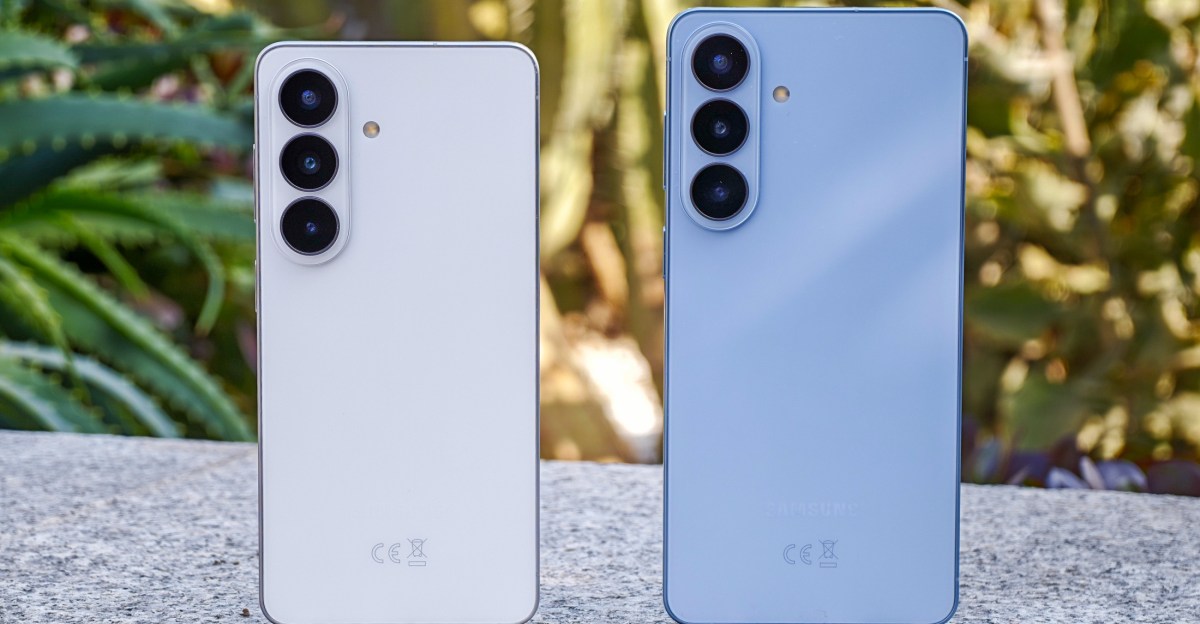
Visually, both phones maintain the design language of their predecessors, showcasing straight edges and a familiar camera layout. The cameras have seen minimal updates, now featured in a raised oval platform akin to that of the Galaxy Z Fold 7; however, many users might prefer the cleaner design of previous versions.
The new S26 has expanded slightly, now flaunting a 6.3-inch display; it remains among the lightest models in its class at 167g. Despite its increased size, it promises an enhanced battery life due to the bump to a 4,300mAh capacity—300mAh more than the S25. Early testing indicates that the S26 can maintain a full day’s charge under heavy-use scenarios, although it may not match competitors who are integrating advanced silicon-carbon battery technology.
Samsung’s decision to not adopt magnetic Qi2 charging—something that would have improved the user experience—has drawn criticism, particularly given Google’s recent implementation in their products. Instead, the S26 offers 15W wireless charging, while the Plus pushes this to 20W, alongside fast wired charging options.
Digging deeper, the camera Specs remain largely unchanged, with both models featuring a 50-megapixel main sensor, a 10-megapixel telephoto lens, and a 12-megapixel ultra-wide angle. However, despite capable hardware, the photographic quality shows signs of stagnation over the past few generations, lacking the depth and detail seen in competitors like the Xiaomi 17.
The camera performance, while adequate for daytime photography, struggles in low light and presents a tendency towards over-processing, resulting in flat images. While the S26 has mastered certain video stabilization techniques, such as a horizontal locking feature for action footage, it is clear that Samsung has heavily relied on established technology without significant innovation.
In terms of software advancements, the S26 and S26 Plus come pre-loaded with various AI features, including an enhanced Bixby that offers context-aware responses. Still, the system remains inconsistent in executing certain commands, revealing the limitations of the current AI capabilities.
The Galaxy S26 and S26 Plus are solid devices; however, for anyone with a current S25, S24, or even an S23, they may not provide compelling reasons to upgrade. Most improvements—while notable—feel incremental at best, leaving consumers wanting for more substantial innovation in a rapidly evolving marketplace. As it stands, Samsung’s main takeaway appears to be a broader focus on AI integration rather than radical new features or groundbreaking design.
Photography by Dominic Preston / The Verge
Source: Original Source
